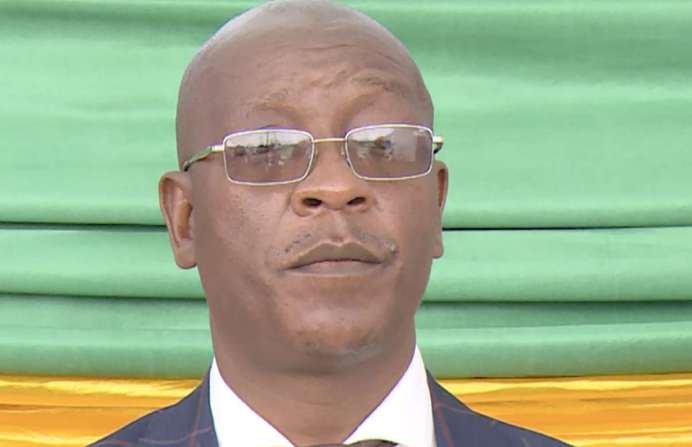
Justice, Legal and Parliamentary Affairs minister Ziyambi Ziyambi says he will respond to questions in parliament on Tuesday next week after an intense second reading debate which started last week.
MPs have been slugging it out in the National Assembly over the contentious Constitution Amendment Bill (N0.3) which introduces far-reaching political, electoral and governance architecture changes.
Ruling party legislators are overwhelmingly supporting the bill, with the support of some opposition MPs, pivoting to a two-thirds majority required to pass it into law.
The debate has been no-holds-barred. Ziyambi introduced the bill for the first reading on Tuesday last week, a formality without going through the usual Parliamentary Legal Committee stage for ordinary bills since it is a constitutional amendment, before delivering his second speech the following day, on Wednesday.
After that MPs have been intensely debating the bill which makes far-reaching political, electoral and governance architecture changes.
The minister says it is the most debated bill in Zimbabwean legislative history yet.
Ziyambi adds that after delivering his response to the second reading debate issues and questions, the bill will be subjected to a vote where a minimum simple majority is required for it to go through to the committee stage.
Following that, the bill will go to the committee stage of the whole house for clause-by-clause consideration and scrutiny.
The committee will vote on a clause by clause basis through a simple majority for it to proceed.
The bill can be fail at the stage if MPs disagree with amendments, which is unexpected.
If the amendments are passed, the bill goes back to the house after the committee stage process, followed by a third reading.
At the third reading stage, the bill will also be subjected to a decisive vote for adoption requiring a two-thirds majority, the most critical juncture.
If adopted it is then sent to senate to undergo the same process in the upper house.
If senate makes changes, the bill goes back to the National Assembly for consideration, endorsement or more changes, then back to senate again for voting.
And finally, if everything is adopted without changes, it then goes to the President for assent. Ziyambi says the whole process will be complete by monthend.