Harare, 7 August 2026- The European Union is reinforcing its support with USD 345,000 in humanitarian aid to contribute to the support to the increased number of Zimbabweans returnees fleeing violence in South Africa and to strengthen Zimbabwe’s response to a surging cholera outbreak.
The funding will help provide life-saving assistance to thousands in urgent need.
The EU is supporting Zimbabwe Red Cross Society in assisting over 5,000 vulnerable returnees from South Africa following violence targeting foreign nationals.
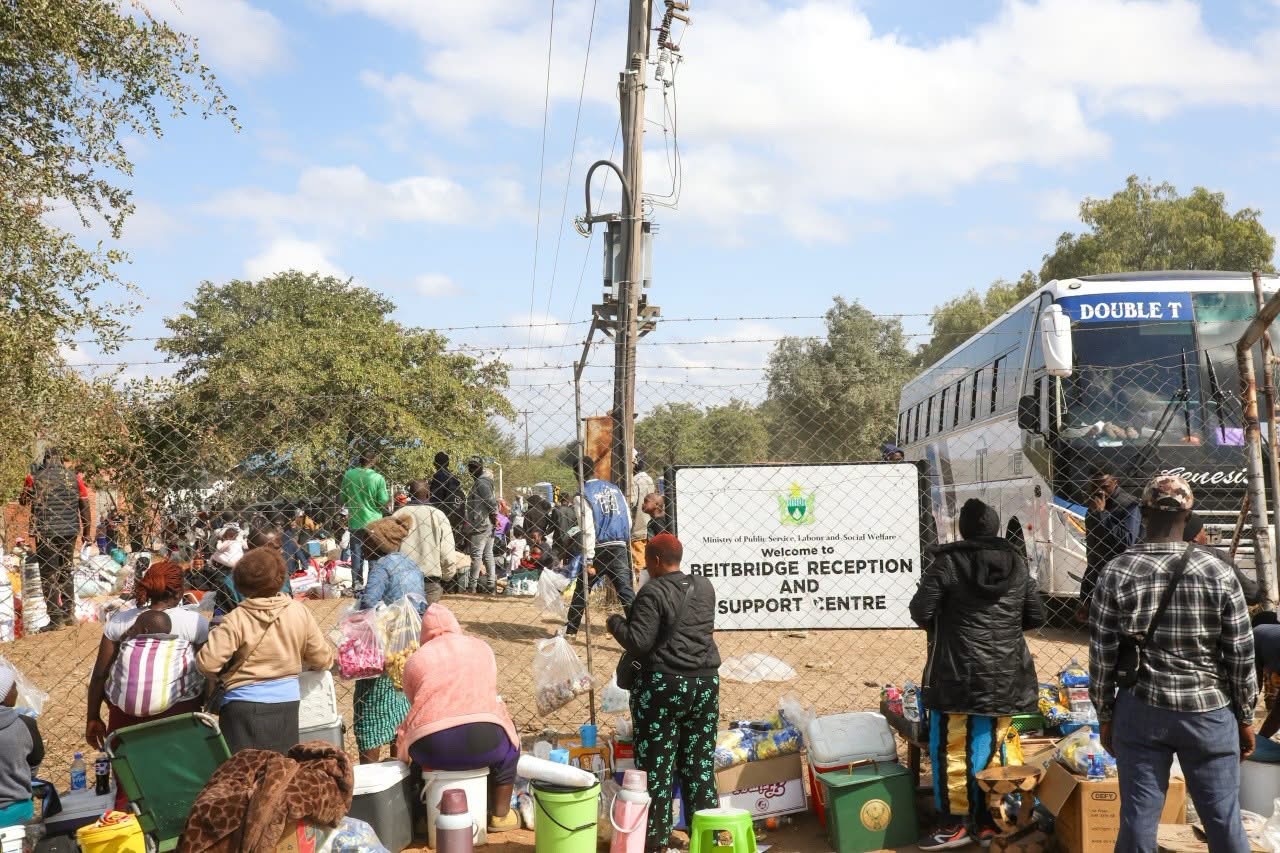
Between April and 28 July, almost 110 thousand people have crossed back into Zimbabwe, placing significant pressure on reception facilities at Beitbridge Border Post.
Many returnees are spending nights at the reception centre while waiting for transport home, facing cold winter temperatures and limited shelter.
This support intends to join forces with the ongoing Government-led efforts and other partners to assist returnees at Beitbridge and with transport services.
The EU funding will reinforce the efforts of the Zimbabwe Red Cross Society in delivering much-needed relief including emergency shelter, food, blankets, clean water, healthcare, hygiene support, and essential relief supplies.
The operation will also provide psychosocial support, protection services, and Restoring Family Links (RFL),helping families reconnect with loved ones.
The humanitarian response prioritizes support for women and children, older persons, people with disabilities, and others with specific needs.
Women and girls, who constitute an estimated 65 per cent of the returning population, will receive targeted support to address their specific health, protection, and dignity needs.
The cholera outbreak, first detected in Rushinga District in January 2026, has since spread to several districts in Manicaland and Midlands provinces.
Since then, transmission has been reported in Nyanga, Mutasa, Mutare City, Chipinge, Chimanimani and Zvishavane, with mining communities and border areas emerging as major hotspots.
Limited access to clean water, sanitation, and hygiene services in these areas continues to increase the risk of further transmission.
In response to the cholera outbreak, the EU funding will provide 88,200 people with anticipatory measures and response, such as training and deploying volunteers to strengthen community surveillance, early case detection and referral, hygiene promotion, household water treatment, a rapid response strategy to mitigate cholera outbreaks, and community engagement in the affected districts.
The two operations will run for six months and will be conducted in coordination with the Government of Zimbabwe, the IFRC, United Nations agencies, NGOs and other stakeholders.
Background:
The European Union (EU) together with the EU Member States is the world’s leading donor of humanitarian aid.
Relief assistance is an expression of European solidarity towards people in need around the world. It aims to save lives, prevent and alleviate human suffering, and safeguard the integrity and human dignity of populations affected by natural hazards and human-made crises.
Through its European Civil Protection and Humanitarian Aid Operations department, the EU helps millions of victims of conflicts and disasters every year.
Headquartered in Brussels and with a global network of field offices, the EU assists to the most vulnerable people, based on humanitarian needs.
The EU is signatory to a €16 million humanitarian delegation agreement with the International Federation of Red Cross and Red Crescent Societies (IFRC) to support the Federation’s Disaster Response Emergency Fund (DREF).
Funds from the DREF are mainly allocated to “small-scale” disasters – those that do not give rise to a formal international appeal.
The Disaster Response Emergency Fund was established in 1979 and is supported by contributions from donors.
Each time a National Red Cross or Red Crescent Society needs immediate financial support to respond to a disaster, it can request funds from the DREF.
For small-scale disasters, the IFRC allocates grants from the Fund, which can then be replenished by the donors.
The delegation agreement between the IFRC and ECHO enables the latter to replenish the DREFfor agreed operations (that fit within its humanitarian mandate) up to a total of €16million per year globally.