
News
How Magic Grass Is Transforming Farmers’ Lives in Zimbabwe

BY NATHAN GUMA AND DELIGHT GUMA
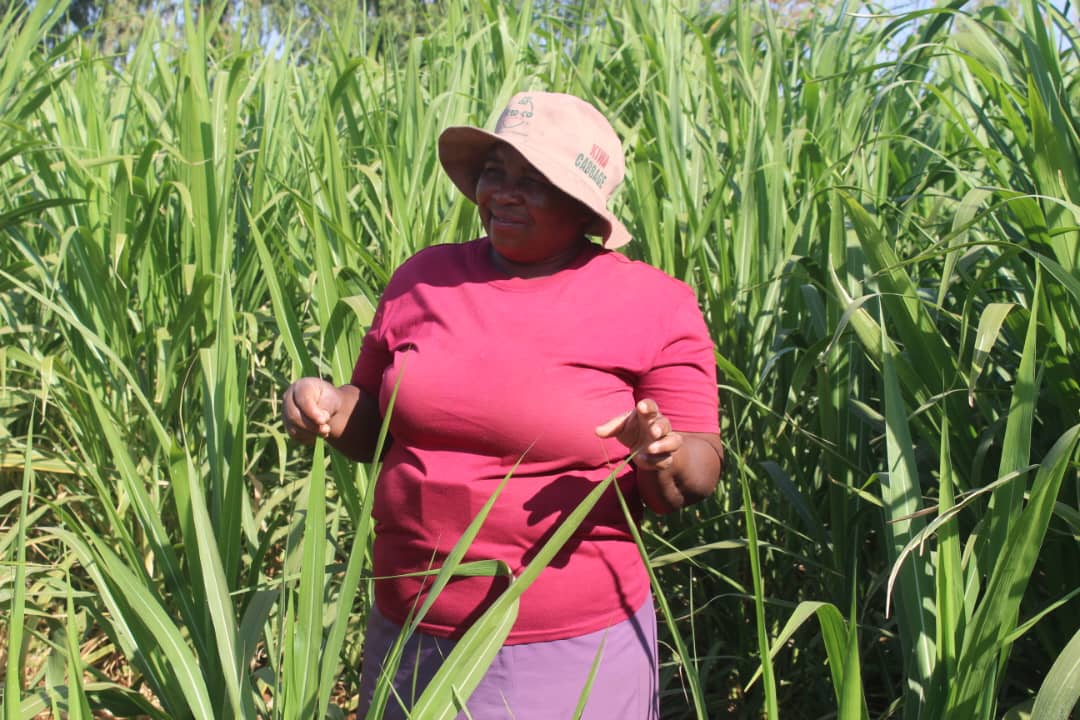
WHEN severe water shortages made market gardening increasingly difficult in Nyabira, Zvimba East, Lizzie Chara’s family survived on about US$20 a month.
Today, she is among the farmers whose livelihoods have been transformed through the Juncao Technology Project, an innovation promoting sustainable agriculture while improving household incomes.
Chara, a farmer from Nyabira, about 32 kilometres northwest of Harare, says erratic rainfall and depleted groundwater levels made it almost impossible to sustain market gardening.
“We would earn approximately US$20 a month,” she says.
The Juncao Technology Project uses fast-growing grass to produce medicinal mushrooms and livestock feed while promoting soil conservation.
Giant Juncao grass has a broad range of adaptation to soil moisture conditions and exhibits tolerance to both drought and waterlogging.
It is also highly adaptable to different levels of soil fertility.
Even on relatively infertile land, it may obtain nitrogen from the atmosphere through nitrogen-fixing processes and make use of the limited nutrients available in the soil, thereby maintaining normal growth.
Under nutrient-rich conditions, it can effectively absorb the abundant available nutrients and achieve vigorous growth.
Once harvested, the grass is dried and chopped before being used as a substrate, or breeding medium, for mushroom production, replacing wood logs or sawdust.
After harvesting the mushrooms, the nutrient-rich residue is reused as organic livestock feed and fertiliser.
The project has transformed Chara’s household income and financial security.
“Before Juncao, we didn’t have any assets, even phones,” she says.
“At times we had to share a single phone just to communicate. Our children were not going to school because we could not afford fees. But now, we have cattle among other things.”
“The main business in our areas is gardening. We wanted to start such, but it was impossible because we had no water.”
She says she is now reinvesting profits from the project into other ventures.
“I recently started a fish business, where I buy from Kariba and sell here. My standard of living has improved greatly,” she says.
“Before the project, we would earn approximately US$20 a month, which has risen to US$500 now. Our first mushroom earned US$70, which we used for basic needs. We have reinvested into fish among others. We also raised money to buy seeds and hire a tractor for better yields.”
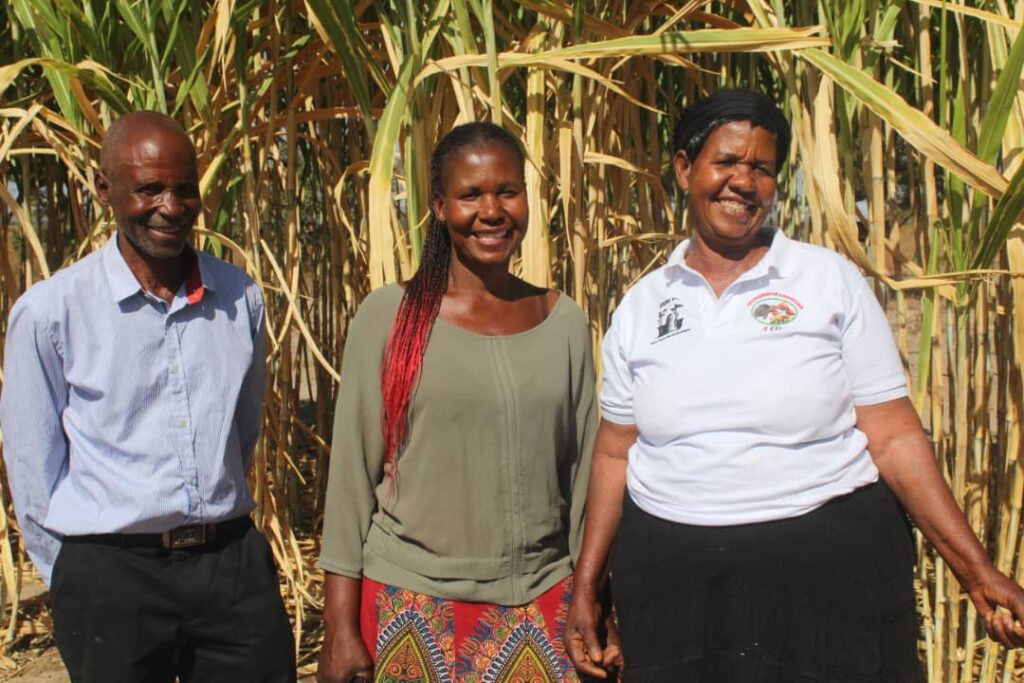
Chara’s experience is not unique as Makandida Mangwiro, a farmer from Ward 25 in Zvimba East District, says the project has also transformed her livelihood and enabled her to supply other farmers.
“Since we started growing Juncao, our livelihoods have improved and our business has grown as well,” she says.
“We started off with 20 Juncao cuttings. And, from these, we now have about 500 plants, and we are now even supplying farmers in our community. We now have nutritious fodder for our livestock. Our cows, goats, pigs, and chickens love it.”
Mangwiro has purchased machinery to grind Juncao grass and now produces her own silage and stock feed, expanding her enterprise to include Roadrunner chickens fed on Juncao-based feed.
The technology has also been adopted by agricultural colleges to train the next generation of farmers.
At Gwebi Agricultural College, the project, which started with 250 plants, has been running since February 2025 and has expanded significantly.
Sandra Ndere, a lecturer at Gwebi Agricultural College, says the innovation has already been incorporated into the institution’s curriculum.
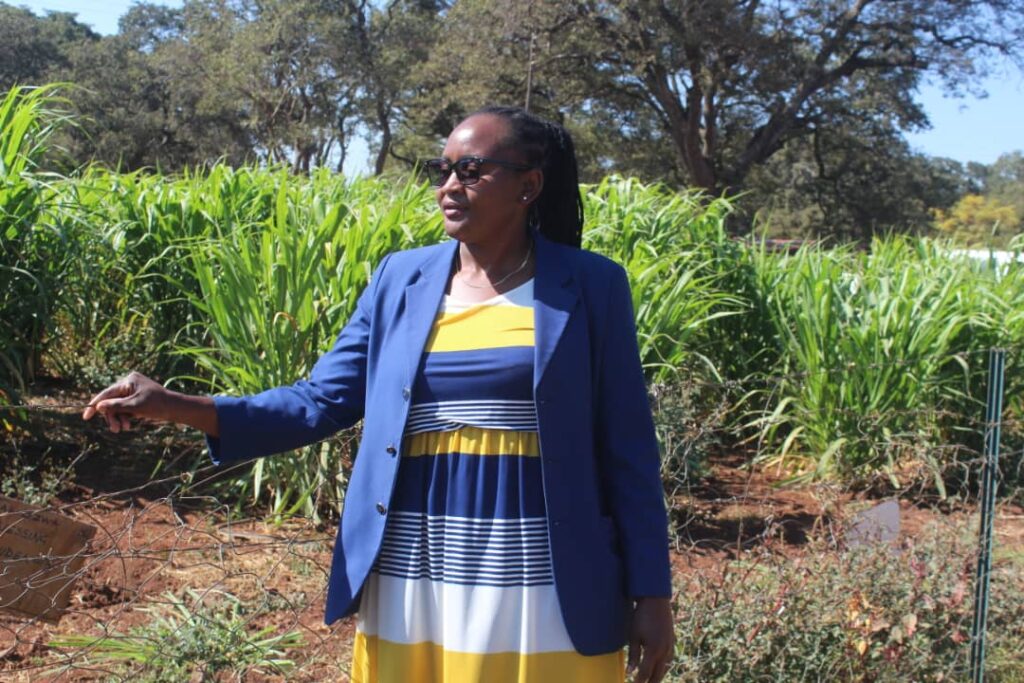
“Students learn how to use it in range and and pasture management, horticulture for mushroom production, and agricultural engineering for feed processing. They also process both the grass and mushrooms into various value-added products,” Ndere says.
She says that once the grass matures, it is harvested and chopped or crushed using grinders.
The ground grass is then mixed with other materials, such as cottonseed husks, to make the substrate for mushroom production.
The substrate is inoculated and incubated in bags before being transferred for fruiting, where mushrooms are produced.
With a large herd of livestock, Ndere says Gwebi Agricultural College intends to process the grass into livestock feed by pelleting it for animal consumption.
The technology is gaining traction across Zimbabwe, reaching all 10 provinces.
More than 279 Juncao grass cultivation and application demonstration sites have been established nationwide, together with 196 Juncao mushroom cultivation and demonstration sites across six provinces.
In addition, 26 training sessions have been conducted, benefiting a total of 1,180 participants.
According to the Juncao Technology team in Zimbabwe, the innovation could provide a long-term solution for promoting sustainable farming and reducing poverty.
“Zimbabwe’s climate and land conditions are highly suitable for the growth of Juncao grass. Once planted, it can be harvested for many years, with simple management requirements and very low input costs,” the team says.
The team also says the grass plays an important role in soil conservation.
“Juncao grass is drought-tolerant, resilient on poor soils, and supported by a deep root system. It does not require large amounts of irrigation water or chemical fertilisers, and can still maintain stable growth in years of low rainfall.”
“The well-developed root system of Juncao grass helps stabilize slopes, control gullies, and rehabilitate saline, alkaline, and degraded land, thereby reducing soil erosion.”
For Chara, the benefits of the project extend beyond farming.“Our daughter recently got married, and we needed money for the wedding.
We used income from this project to cover all those expenses,” she says.
For families such as Chara’s, Juncao has become more than an agricultural innovation, it has provided a pathway to higher incomes, improved food security and greater resilience in the face of climate change.