
News
ZanuPF Succession Gun Versus Money
Tagwirei seemed to cement the tenderpreneurship perception in June when he said in Bulawayo: “If you are not a tenderpreneur, you are foolish”.

Will Chiwenga Or Tagwirei Win
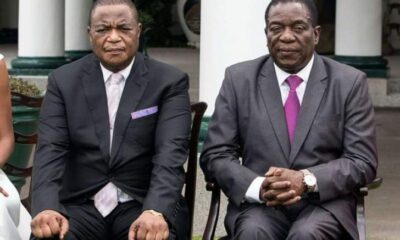
The Battle As President Emmerson Mnangagwa’s succession battle unfolds, a subtle sub-plot – gun versus money theme – has distinctly emerged pitting Vice-President Constantino Chiwenga against local multi-millionaire tycoon Kudakwashe Tagwirei.
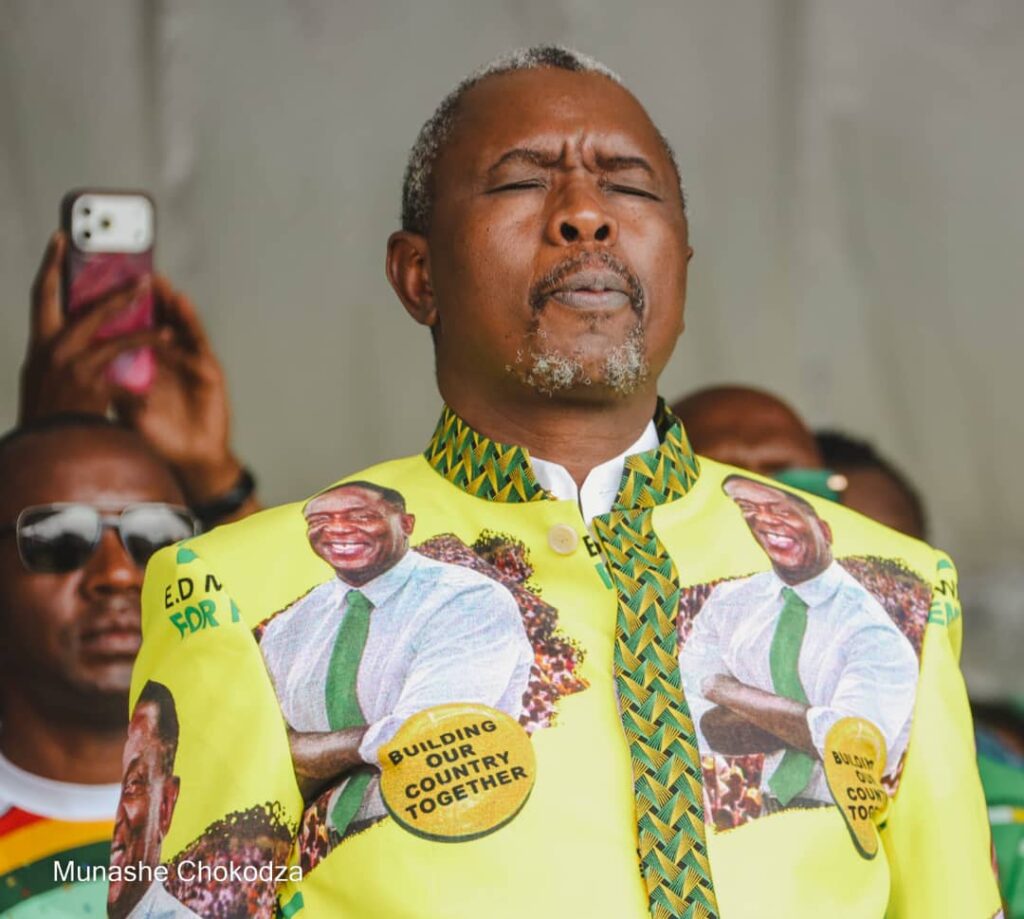
Zimbabwe Defence Forces commander General Phillip Valerio Sibanda is a dark horse in the race which risks exploding into a lethal cutthroat tussle which may plunge the country deeper into political instability and chaos.
Zimbabwe has been stuck in political and economic turmoil for well over two decades largely due to leadership, governance and policy failures by Zanu PF leaders, first the late former president Robert Mugabe and now Mnangagwa.
The country has been reduced to rubble and its people badly impoverished, making it an example of one of post-colonial Africa’s greatest tragic failures of leadership.
Zimbabweans are today a laughing stock of the region due to Zanu PF calamitous rule.Mugabe was removed after 37 disastrous years in power in a coup in November 2017 by Mnangagwa, backed by Chiwenga.
The gun won the succession battle over Mugabe’s larger-than-life character, long rule and influence, as well as his command of state resources – money.
The gun had won the succession power struggle between founding Zanu leader Ndabaningi Sithole and Mugabe in 1975 during the Mgagao Declaration.
The Mgagao Declaration was a communique written in November 1975 by young Zimbabwe African National Liberation Army (Zanla) guerrilla fighters at a training camp in Mgagao, Tanzania.
The declaration led to the removal of Sithole as the leader of Zanu and helped elevate Mugabe to power, formally in 1977 after the Chimoio Congress in Chimoio, Mozambique, where Zanu was based during the liberation struggle.
It was a historic pivotal event where Mugabe was formally elected the new Zanu leader, solidifying his grip on the party following internal power struggles and brutal suppression of rival factions.
The congress occurred during a period of intensified conflict and resulted in the restructuring of the party’s leadership with an elected Central Committee, the party’s decision-making organ in-between congresses.
The parent liberation struggle wing, Zapu led by founding liberation movement leader Joshua Nkomo, from which Zanu broke away, was based in Lusaka, Zambia.
Chiwenga played a key role during the Mgagao Declaration, just like he did in 2017.He helped install Mugabe in power and also spearheaded his removal.
Now, he faces a similar historical mission: he helped Mnangagwa’s ascendancy, but has an arduous task to remove him to ensure his own rise to power.
It is an enormous task as the context, environment and objectives have shifted since 1975 or even 2017.
The form, content and dynamics of the succession power struggle in Zanu PF has changed so much now.
As Zanu PF faces yet another critical juncture, which may make or break it, the succession battle lines are drawn, this time around the gun versus money dichotomy.
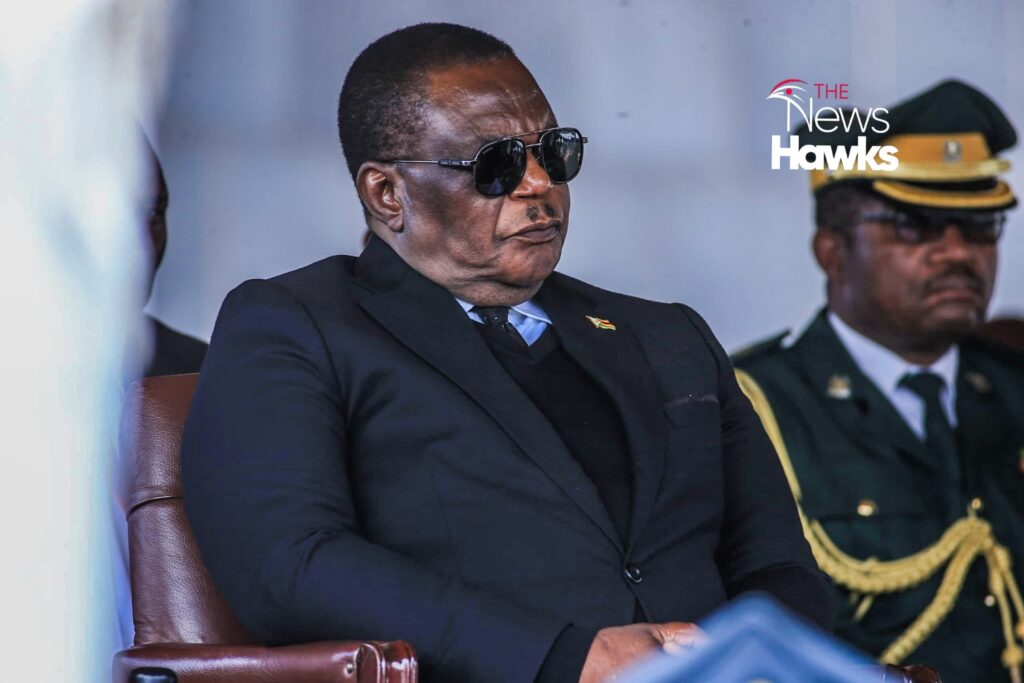
Chiwenga, a retired army general who was commander of the Zimbabwe Defence Forces until the 2017 coup, represents the gun.He has deep personal and institutional roots in the military.
During his long career, he has fought and won many military and political battles.
Tagwirei, a rich businessman whose fortune is estimated to be close to US$1 billion and newly co-opted Zanu PF Central Committee member, typifies money.
Tagwirei, combing proximity to power and money, is currently the most influential businessman in Zimbabwe.
Tagwirei is a Mnangagwa close business – and political – ally.
He was also in the now defunct Presidential Advisory Council.
Among many other formal posts, he currently chairs government’s Land Tenure Implementation Committee.
Tagwirei is not an industrialist like Nigerian billionaire Aliko Dangote or Zimbabwean telecoms mogul Strive Masiyiwa as he is viewed as product of crony capitalism, the nexus between politics and money, rooted in political patronage and tenderpreneurship, but he is hugely powerful and influential over government, particularly Treasury.
Tagwirei seemed to cement the tenderpreneurship perception in June when he said in Bulawayo: “If you are not a tenderpreneur, you are foolish”.
A report published today by The Sentry, an American investigative organisation in 2021,
“Shadows and Shell Games: Uncovering an Offshore Business Empire in Zimbabwe,” revealed a labyrinth of structures and key details of Tagwirei’s business empire and practices.
The Sentry’s investigation showed Tagwirei, who has been followed by allegations of corruption and cronyism for years, has been using complex corporate structures and government patronage to build his business empire and enormous wealth.
The tycoon then presided over a sprawling network of more than 40 companies spanning the oil, mining, banking, logistics, transportation, and import/export sectors.
The report detailed how Tagwirei effectively concealed his control over this empire through an elaborate secret network, hiding his wealth and ownership through offshore financial structures.
Using his massive wealth, Tagwirei became a critical Zanu PF funder, with his money having been decisive in many ways in the ruling party’s controversial election victories in 2013, 2017 and 2023.
Without his money, Zanu PF might not have easily prevailed during those elections.
The rise of Tagwirei and his move to manoeuvre out of the political shadows into the public domain has led to the gun versus money contest, crystallised around factions supporting Mnangagwa and Chiwenga.
In politics, the phrase “gun versus money” describes a dynamic tension between two primary sources of political power: military force and financial influence.
While military might (gun) can seize power through coercion and authority, economic leverage (money) can shape political outcomes through persuasion, lobbying, and financial support.
Both forces often work together to shape political agendas, as a strong military typically requires robust economic backing.
The use of military force is the most direct application of state power.
As noted by political philosopher Max Weber, the state is defined by its monopoly on the legitimate use of physical force.
Some powerful members of the elite hold the levers of state power.
Military power can influence politics both domestically and internationally.
Economic power, wielded by governments, corporations, and wealthy individuals like Tagwirei, shapes politics through control of resources, financial incentives and public narratives, especially through media and now social media.
Chiwenga projects himself as a liberation struggle hero who fought for independence and liberation.
After playing a key role in first installing Mugabe and later Mnangagwa, and serving in the army and government for 45 years, he feels entitled to be the next Zimbabwean President.
His presidential ambitions are now a public secret.
He can’t hide it.
Yet Mnangagwa, his hitherto ally, doesn’t want him.
He can’t hide it either.
The underlying motivations are power and money, fueled by patronage, regionalism and tribalism.
Mugabe, in the middle of the coup in 2017, wanted Chiwenga to take over and prevent Mnangagwa from coming in partly because of sub-ethnic tribalism.
Mugabe wanted a fellow Zezuru successor, just like Mnangagwa now wants a Karanga tribesman to succeed him.
Tagwirei or Sibanda (both Karanga) fit the bill.
Tribalism is a major factor and dynamic in Zimbabwean politics despite an attempt to suppress it.
It has boomed and thrived under Zanu PF rule, and is currently a big factor in Mnangagwa’s succession infighting.Mnangagwa and Zanu PF faction say they don’t want any Zezuru near power after Mugabe’s 37-year rule.
Ndebeles and other minority tribes are practically unable to lead Zanu PF or any other major party in due to ethnicity, a blight of Zimbabwean politics.
Chiwenga, married to a Ndebele woman Miniyothabo Baloyi, a colonel in military intelligence, has widen his appeal among the Ndebeles, an influential minority, which helps his bid for power.
Similarly, Tagwirei, who is originally Shona-speaking, but equally fluent in Ndebele, has broaden his own appeal cross the Ndebele constituency, which is important in the current succession fight.
Sibanda also has a similar appeal; he is Karanga but has a Ndebele surname and was Zapu/Zipra.
Ethnicity, whether as a biological or social construct or both, influences politics in Zimbabwe in brazen ways which keeps the country backward.
Yet at the moment the battle line is drawn between the gun and money, with the intersection being even being more important.
Tagwirei captured it well when he said in Masvingo in May that with money one can get power and with that control the army.
In interpreting a biblical verse, Tagwirei said the word “wealth” can be interchanged with “army”, implying that with wealth, one gains the ability to fight or protect oneself, suggesting a parallel between wealth and having an army.
In other words, Tagwirei has now come to the conclusion that the best way to protect himself and his business interests is to seek political power.
This interpretation was met with controversy, with critics suggesting that it implied his wealth gave him power over the army or significant political influence.
It came amid reports Tagwirei has a number of army commanders on his payroll.
Meanwhile, Chiwenga, who is close to the Chinese, just like Mnangagwa himself, strongly believes “political power grows out of the barrel of a gun” – a Mao Zedong philosophy.
Mugabe believed the same, but insisted the gun is subordinate to politics.
Politics controls the gun, he often stated, before the gun trumped politics in 2017.
Chiwenga often refers to 2017 to spook Mnangagwa and his faction, but the President has taken serious measures to prevent that through government and security changes, including the removal of Zimbabwe National Army commander Lieutenant-General Anseleem Sanyatwe in March.
That prevented a looming coup, like in January 2019 when Mnangagwa survived a putsch while travelling in Russia and eastern Europe.
Sibanda blocked the coup.
The succession battle between Mnangagwa and Chiwenga is deadly and intensifying.
Mnangagwa survived potential assassination in June 2018 at White City Stadium in Bulawayo, which he described as an “inside job”, while Chiwenga narrowly escaped death from poisoning by his internal rivals.
Since January, when he was Acting President, Chiwenga has been openly fighting Mnangagwa and his business cronies, whom he describes as “Zvigananda”, chief among them Tagwirei, Wicknell Chivayo and Pedzisayi Scott Sakupwanya.
To Chiwenga, they symbolise corruption and looting, although Mnangagwa’s allies are pushing on that narrative, accusing him of associated with corruption like his boss.
The fight exploded into deadly confrontation when in September Chiwenga confronted Mnangagwa in a politburo meeting accusing him of supporting “Zvigananda”, his 2030 political agenda funders.
Mnangagwa hit back through his allies, accusing Chiwenga of being power-hungry and entitled to rule.
The NewsHawks broke those two major stories and was responsible for publication of Chiwenga’s 17 September presentation and Zanu PF legal affairs secretary Ziyambi Ziyambi’s subsequent withering response, which went viral.
The two documents were sourced and released by The NewsHawks in the public interest.
Prior to that, Chiwenga had fought a pitched battle to prevent Tagwirei from being co-opted into the Zanu PF Central Committee, but was eventually overwhelmed.After Tagwirei got into the Central Committee at the party’s annual conference in Mutare last month, he has been on the campaign trail to raise his political profile and in the process mount a solid challenge to Chiwenga.
Although Tagwirei – a former Chiwenga close associate – denies he has presidential ambitions, his actions speak louder than words.
Tagwirei has been actively addressing various political meetings since joining formal party structures.
He has been holding inter-district meetings in Harare and making significant donations to the party and local communities.
Tagwirei has been addressing inter-district and Provincial Coordinating Committee meetings in Harare, particularly in Hatcliffe, Chitungwiza, Highfield and Dzivarasekwa, among other places.
During his addresses, Tagwirei outlined extensive social and economic development plans for local communities, aligning with the nation’s “Vision 2030”, while backing Mnangagwa.
These pledges include construction of a multi-million-dollar market complex, five clinics with maternity wards, and drilling of 80 solar-powered boreholes.
He also made pledges to construct five clinics with maternity wards, and donated 12 500 Christmas/food hampers to vulnerable families through his Bridging Gaps Foundation.
Tagwirei also donated money to hospitals and schools, while setting up a revolving fund for Zanu PF structures.
He also helped the disabled, offered scholarships, salaries to his relatives and the disadvantaged, medical bills and donated bricks.
Prior to this, Tagwirei donated 300 vehicles to Zanu PF Central Committee members in September.
His involvement in politics marks a shift from his previous behind-the-scenes role as a major party financier.
This has presented Chiwenga with a direct challenge which he feared.
Tagwirei’s actions indicate an active and visible political role within the ruling party, moving beyond his previous status as a quiet financier and using his money to build a foundation for pursuit of power.
Chiwenga has also been going around making public appearances as he guns for power despite major setbacks.
His leverage remains the military, but that pillar has been eroded by Mnangagwa’s power consolidation manoeuvres and his plan to extend his rule beyond his 2028 second term constitutional limit to 2030 without elections, partly to block Chiwenga.
Ultimately, it remains to be seen whether the gun or money will prevail in Mnangagwa’s succession power struggle.
The gun always won at critical historical junctures before, but the question now is: will it defeat money this time around.