BY NATHAN GUMA
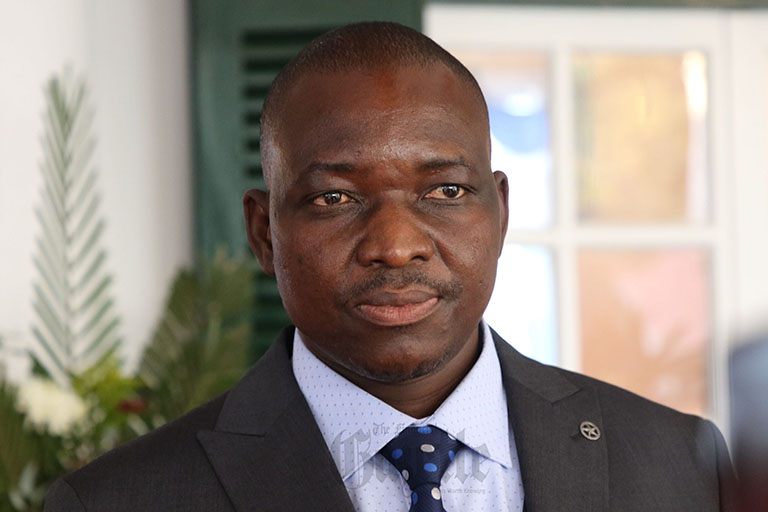
THE United States Embassy in Harare has rejected what it describes as a mischaracterization of a proposed US$367 million health agreement by Zimbabwe’s Information Minister, Soda Zhemu, who described it as a threat, saying the deal would have provided life-saving assistance to the country.
The response comes as Zimbabwe faces a severe health funding shortfall.
In February, Zimbabwe rejected the proposed agreement, which would have provided health funding over five years to support priority programmes, including HIV/AIDS treatment and prevention, tuberculosis, malaria, maternal and child health, and disease outbreak preparedness.
The government argued that the agreement was lopsided, alleging it contained provisions related to critical minerals and the misuse of sensitive health data, claims the United States has denied.
Recently, in Parliament, Zhemu repeated the allegations while responding to Dzivarasekwa MP Edwin Mushoriwa, who questioned why the government had rejected the agreement at a time when the health sector was facing serious funding constraints.
In response, Zhemu said: “There were some conditions. One of the conditions was that we were supposed to provide samples, biological samples for research that was supposed to be undertaken in America as a condition for the money that was supposed to be given to us.
“He also said Zimbabwe was expected to provide biological data from some people in the country as another condition for receiving the funding.”
However, they were going to produce some vaccines for different diseases and ailments and the vaccines were not going to be shared with Zimbabwe,” he said.
However, a US Embassy spokesperson told The NewsHawks that Zimbabwe had ended discussions while the agreement was still under negotiation.
“The United States offered our health assistance to Zimbabwe over a five-year period. The government of Zimbabwe declined. It assured us they can take care of its own people. We are committed to an orderly handover,” said the spokesperson.
“We reject the recent mischaracterization of the terms of the Health Memorandum of Understanding (MOU) made by a high-level Government of Zimbabwe official, which described the MOU as a threat when, in fact, it would have provided $365 million in lifesaving assistance over five years for Zimbabwean health programs, including HIV/AIDS, tuberculosis, malaria, maternal and child health, laboratories, and outbreak response.”
The spokesperson said the proposed MOU required the Zimbabwean government to co-invest in the programmes to ensure sustainability, financial accountability and transparency.
The spokesperson added that the agreement also required the sharing of disease specimens during outbreaks, describing it as a long-standing international practice that enables the rapid development of medical solutions.
“Assertions that the United States was seeking personal/private data of Zimbabweans are categorically false,” said the spokesperson.
“Any suggestion that Zimbabweans would not have benefitted from American medical research is disproven by decades of U.S. assistance, through which Zimbabweans have received U.S. treatments and vaccines.”
The spokesperson said Zimbabwe withdrew from the bilateral Health MOU while its terms were still open for negotiation.
“The Trump Administration concluded 34 bilateral global health MOUs with these same requirements, representing over $24 billion in combined health funding, including more than $14.3 billion in U.S. assistance and more than $9.6 billion in co-investment from partner countries. Zimbabwe chose to opt out,” the spokesperson said.
Impact of the pullout
Zimbabwe’s decision has resulted in the United States winding down its health assistance in the country.
According to a statement issued by the US Embassy in February, the proposed collaboration would have benefited Zimbabwean communities, particularly the 1.2 million men, women and children receiving HIV treatment through US-supported programmes.
“We will now turn to the difficult and regrettable task of winding down our health assistance in Zimbabwe,” read the statement.
The Embassy said the proposed MOU represented the largest potential health investment in Zimbabwe by any international partner and was designed to help the country gradually assume greater responsibility for financing its health system.
It said the agreement would have built on more than US$1.9 billion in US health assistance provided to Zimbabwe since 2006, support that it says contributed to Zimbabwe achieving the UNAIDS 95-95-95 targets.
Sixteen African countries have signed similar health collaboration MOUs with the United States, representing more than US$18.3 billion in health funding, including over US$11.2 billion in US assistance and US$7.1 billion in co-investment from partner countries.
Impact of US health funding on Zimbabwe
The United States has been Zimbabwe’s largest bilateral health donor, with its support contributing to improvements in life expectancy, which has risen from about 58 years in 1995 to approximately 66 years in 2024.
US-funded programmes have supported better public health, nutrition, access to medicines, vaccinations, and improved antenatal and postnatal care.
Improved treatment has also contributed to a sharp decline in HIV-related deaths among children and people living with HIV.
Zimbabwe has also reduced the number of AIDS-related orphans from more than one million in the 2000s to about 400,000 in 2023, reflecting progress in the country’s fight against HIV, much of it supported by international partners, particularly PEPFAR and the Global Fund.