BY NATHAN GUMA, in New York
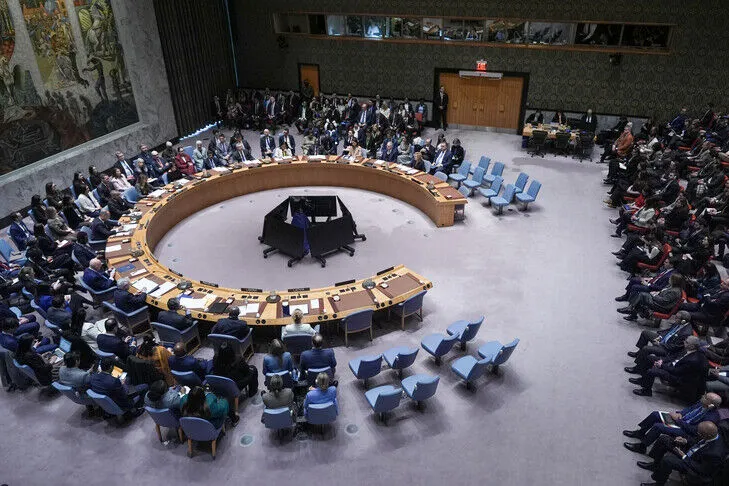
NEW YORK – The United Kingdom, United States and France have raised concerns at the United Nations Security Council over Iran’s alleged failure to comply with its nuclear obligations, as tensions over Tehran’s nuclear programme intensified.
The warnings came a day after the International Atomic Energy Agency’s Board of Governors voted to report Iran to the Security Council over its failure to cooperate with a long-running investigation into uranium traces found at undeclared sites.
At the Security Council, Western powers maintained pressure on Tehran, warning that Iran’s nuclear activities and restrictions on international verification remained a serious proliferation concern.
London called on Iran to restore cooperation with the International Atomic Energy Agency (IAEA) and provide information required to establish the status of its nuclear material.
France similarly called on Iran to comply with its international obligations and restore access for international nuclear inspectors.
The United States also defended continued international pressure on Tehran, maintaining that Iran must comply with obligations contained in Security Council resolutions.
“We call on Iran to take all necessary steps by the Agency and the Board, including the information on the previously declared nuclear material and access to facilities,” said Jennifer Locetta, US Alternative Representative for Special Political Affairs at the UN.
“Iran and its supporters on this Committee are well aware of what Iran needs to do to resolve this issue. The United States will continue to promote the broadest possible international compliance with the state obligations mandated by this Council’s resolutions.”
She also said the US would look to partners in the coming days to weigh options to ensure that there is sufficient infrastructure in place to support that goal.
French Ambassador Jérôme Bonnafont said the International Atomic Energy Agency had lost continuity of knowledge regarding Iran’s enriched nuclear materials after Tehran suspended cooperation with the agency.
The IAEA has been unable to conduct in-field verification activities at affected facilities and has lost continuity of knowledge regarding important aspects of Iran’s nuclear programme, including its nuclear material.
Bonnafont said Iran had accumulated more than 440 kilogrammes of uranium enriched to 60%, arguing that the stockpile had no credible civilian justification.
“The accumulation of the stockpile of more than 440 kilograms of highly enriched uranium to 60% has no credible civilian justification,” he said.
“Rather, it represents a potentially sufficient quantity to produce 10 nuclear devices,” he said, raising concerns over nuclear proliferation.
The IAEA had previously estimated that Iran possessed 440.9 kilogrammes of uranium enriched up to 60% before the attacks on its nuclear facilities, according to Reuters. The agency has since faced difficulties verifying the current status of the material.
The development has deepened disagreement within the Security Council over the status of sanctions against Iran.
Britain and France maintain that the so-called snapback mechanism under Security Council Resolution 2231 was triggered in 2025 following Iran’s failure to meet its commitments under the 2015 nuclear agreement.
They argue that the process resulted in the reapplication of previous Security Council sanctions against Iran.
Russia and China rejected that interpretation.
Russian Ambassador Vassily Nebenzia said the snapback mechanism had not been legally triggered and argued that Resolution 2231 had expired on 18 October 2025.
China similarly blamed the United States’ withdrawal from the Joint Comprehensive Plan of Action, military action against Iran and its policy of maximum pressure for worsening the nuclear dispute.
The two permanent members have therefore challenged the legal basis of the sanctions regime that Britain and France say was re-applied through the snapback mechanism.