Members of Parliament in Senate have pointed out corruption as the greatest problem in the fight against substance abuse in Zimbabwe.
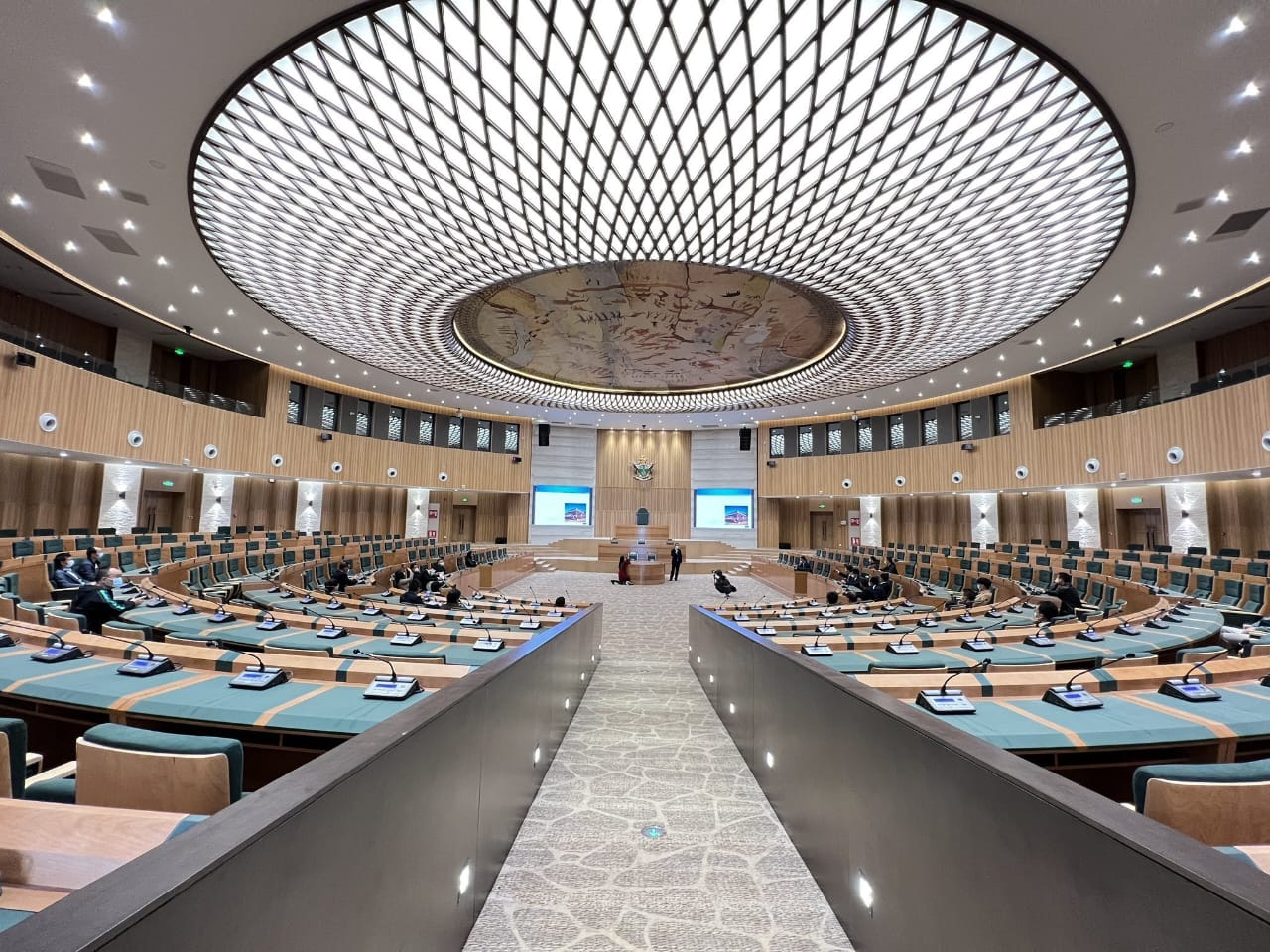
This came out during Senate’s Wednesday sitting where members where discussing the report of the benchmarking visit by the African Parliamentary Network Against Corruption (Apnac) and Senator Tambudzani Mohadi condemned the corrupt conduct of police in dealing with drug peddlers.
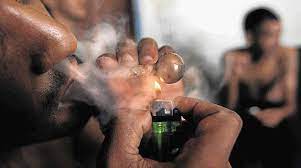
“Let me turn my attention to another insidious issue related to corruption: drug trafficking. Some individuals are aware that drugs are being sold by specific people or at certain locations. However, when they report this information to a police officer, the officer’s corruption often prevents any action from being taken. Instead of arresting those involved in drug dealing, the corrupt officer may alert the perpetrators, advising them to be cautious to avoid arrest. In exchange for not being reported, these officers may demand bribes from the offenders, further perpetuating the cycle of corruption,” she said.
The police have been under fire for arresting drug users while peddlers walk scott free.
Between January 2026 and February 2026 police have made numerous arrests pertaining drug peddling.
Senator Zvidzai also indicated that the problem with policing corruption in Zimbabwe comes back to weak institutions.
“The weak institutions also lead to weak accountability mechanisms. So, corruption thrives because of the weak institutions and limited accountability mechanisms,” he said.
These substances are not made locally but are being imported.
From the data obtained on Zimbabwe Republic Police X handle (which made up Table 1), three border posts are mentioned, Beitbridge, Plumtree, and Maitengwe and are all located in Matabeleland South province. This points to a significant trafficking corridor along Zimbabwe’s southern border, with substances originating from or transiting through South Africa and Botswana.
The Harare – Beitbridge route was also a source of many arrests showing that it is the main arterial route leading from the Beitbridge Border Post into the interior of the country.
Multiple arrests on this road strongly suggest that the drugs were imported and were being transported further into Zimbabwe.
Senator Mohadi says Beitbridge Border post personnel are complicit.
“If we are talking of corruption at these particular borders, there are machines that are used to search goods. These machines are only used when they feel like using them. If they do not feel like using them, they switch those machines off. This is corruption. I can say a lot of things Mr. President,” she added.
In recent days, police have made arrests on the Harare Beitbridge highway.
The volume of drugs on this specific road (including the 310kg dagga seizure, one of the largest in the dataset) confirms that Beitbridge is not just a point of possession, but a major point of entry for large-scale trafficking destined for other provinces like Masvingo, Harare, and beyond.
Tutu Kamboni was arrested at Beitbridge Border Post in a foreign-registered bus traveling to Harare. The cough syrup was found hidden inside the bus .
Charles Togara concealed contraband of illegal substances inside the bus and Peter Zambara received his consignment that arrived with a bus.
Mohadi added that the future of our youth is at stake.
“Let us leave a legacy to our children. Are we going to leave any legacy for them if we are talking of issues of corruption, if we are encouraging them to take mutoriro? Is this what we want as Zimbabweans? If we continue on this trajectory, we are going nowhere,”
Meanwhile, in the latest 2025 Corruption Perception Index report, by Transparency International, Zimbabwe recorded a score of 22 out of 100, reflecting a one-point percentile increase from 21 in 2024.
While this marginal improvement may suggest limited progress, Zimbabwe continues to perform significantly below the Sub-Saharan Africa regional average of 32 out of 100, highlighting the persistence and depth of corruption-related governance challenges.
The CPI indicates perceived public-sector corruption, drawing on expert assessments and business surveys to score over 180 countries on a scale of 0 (highly corrupt) to 100 (very clean).
In its statement, Transparency International Zimbabwe says although there seems to be effort from the government of Zimbabwe, more synergies should be created between governments to deal with transnational natirs of corruption
“TI Z acknowledges ongoing anti-corruption efforts by the Government of Zimbabwe, including the establishment of specialised anti-corruption courts and steps taken towards the recovery of stolen assets domestically. However, given the transnational nature of corruption and illicit financial flows, these efforts must be strengthened through more robust asset recovery from other jurisdictions, enhanced mutual legal assistance, and stronger cooperation with international partners to trace, freeze and repatriate stolen public resources,” read the statement.