
News
NAC’s Uganda GBV model scales down Intimate Partner Violence

BY BRENNA MATENDERE
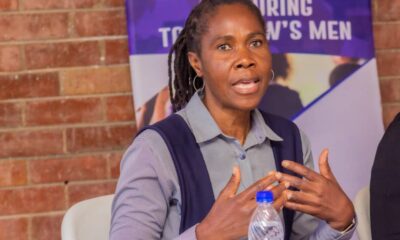
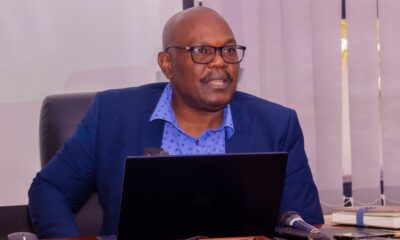
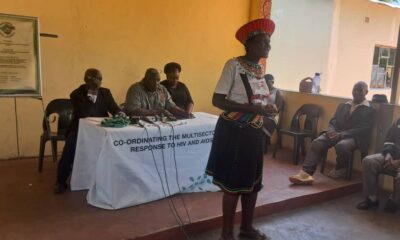
ANNASTANCIA Zendakwaye, National Aids Council’s District AIDS Coordinator for Zaka, has revealed how a model to tackle Gender Based Violence which originated in Uganda titled SASA, has gone a long way in scaling down Intimate Partner Violence in the area which has a direct bearing on HIV.
SASA, which means ‘now’ in Kiswahili, is an acronym for “Start, Awareness, Support and Action.”
It is generally known to be an evidence-based community mobilisation approach aimed at preventing violence against women and was developed through a combination of theory, practice, and relentless optimism.
The project began in Gutu district in 2021 and has since expanded to other wards.
“SASA is a model being rolled out by NAC. It has four phases the Start phase, the Awareness phase, the Support phase, and the Action phase. You don’t just jump to action awareness must come first,” said Zendakwaye
She reiterated that survivors of gender-based violence often experience physical harm, emotional trauma, HIV infection, social isolation, and economic instability. Intimate Partner Violence (IPV) typically involves a power imbalance and control within the relationship. When seeking support, survivors often face obstacles such as fear, shame, or a lack of resources.

“SASA! is not just for champions or facilitators. Chiefs, headmen, village heads and any community member can take on that role. We all know someone being abused physically, emotionally or sexually. But too often, the community stays silent. SASA! says: wake up! Be a champion. Take action,” said the Gutu DAC.
Violence against women is indeed a serious public health and human rights issue in Zimbabwe, with significant prevalence and impact. Studies indicate that a substantial number of women experience physical and sexual violence, and the problem is compounded by factors like gender inequality and harmful cultural norms.
High rates of physical and sexual violence
Data from the 2015 Zimbabwe Demographic and Health Survey shows that about one in three women aged 15-49 have experienced physical violence, and one in four have experienced sexual violence since the age of 15.
Intimate partner violence (IPV)
IPV is particularly prevalent, with statistics suggesting a rate of around 45%. This is higher than the global and sub-Saharan African averages for IPV.
Testimony from survivor
A survivor in Gutu, Maurine Chewa, demonstrated how the SASA model salvaged her after two decades of intense suffering under GBV and in the process turning her away from contracting HIV.
“I was born on April 29, 1981. I passed Grade 7 with 10 units at Chimedza Primary School in Ndanga. Unfortunately, I could not continue my education and began working as a domestic worker.
“In 2002, I got married, and initially, things seemed fine. We had our first son in 2004, a second in 2008, and a third in 2012. After giving birth to my third child via C-section, doctors advised us that I should not have any more children as it would endanger my life.
“However, three years later my husband began insisting that he wanted more children specifically girls. He became abusive, saying he wanted another wife to give him daughters and demanded that I find one for him,” she recounted.
A second wife was soon introduced without warning and without resistance from her husband.
Maurine and her children were ordered to do chores for the new wife but even the priviledged queen could not stand the abuse and left shortly after giving birth to a baby boy.
“He would come home drunk and spit at me, calling my parents vulgar names. Eventually, he brought in another woman and made it clear that I was beneath her. My dignity had been stripped. I couldn’t even tell my parents because he had threatened to kill me,” she recalled.
“My children and I were made to work for her while he hoped she would bear him a girl. But she did not stay long she gave birth to a boy and left after witnessing his violence. He continued to abuse me, mocking me that I could no longer give birth, claiming doctors had removed my womb.”To make matters worse, her husband had never paid lobola (bride price).
“At that point, he had not officially married me. He began harassing me, denying me conjugal rights and verbally abusing me. He said I made him sick because I had only given birth to boys. He even said he would not pay lobola for that reason,” she said.
Church elders from Johane Masowe Yevadzidzi, headquartered in Mt Darwin, finally intervened, forcing him to pay lobola. He grudgingly sent a small bull to her parents an act that triggered even more abuse.
“The elders ordered him to pay lobola, which he did sending a small bull and arguing it were enough since I had only given him boys. After that, the abuse worsened. He beat me regularly over that cow, accusing me of conspiring with the church. He would even soil himself and force me to clean up, claiming that paying lobola gave him ownership over me.”
Her fourth pregnancy in 2020 was met with total rejection. The abuse escalated from verbal attacks to physical violence, choking, and even threats with a knife.
“He rejected the pregnancy entirely. I lost appetite and vomited everything I ate. My sons caught birds and grasshoppers to cook for me. In December 2020, I gave birth to another boy. Even then, the abuse did not stop.
“He started coming home drunk with a knife and I would pray for the sun to rise so I could leave the house,” she said.
In 2022, Maurine found help through the SASA program implemented by NAC and it marked the turn in her life.
With support from her relatives and her brother who works at NAC she finally stood up for herself.
“My brother warned that I would die if I stayed. Joe would choke me. I often woke up with a swollen neck and bruises on my face,” she said, crying.
“Eventually, I was assisted by another police officer and received a court date 13 August. The court granted me a five-year protection order. But when I took the paperwork to my parents’ home, he followed me, demanded the papers, and tore them.”
Maurine had to return to the police and attend another court session. In January 2024, her husband was sentenced to community service, but he never completed it. Nonetheless, the SASA Program had already planted the seed of courage.
“Despite everything, I am grateful to the National AIDS Council. SASA taught me so much and gave me the courage to finally leave in May last year. I now live in Jerera, working as a domestic helper. That is how I found my freedom.”
Violence against women is a major public health and human rights issue throughout Africa and the world- beyond Zimbabwe.
For example, around 35% of women in Namibia, 56% of women in rural Tanzania, and over 70% of women in Uganda report that they have experienced physical or sexual violence at some time in their lives which exposes them to HIV.
These rates are even more astounding when we consider the fact that most violence tends to be underreported as in the case of Maurine before her interface with SASA project.
Although many people think that rape by a stranger is the most common type of violence against women, the vast majority of violence against women is committed by a male intimate partner.
Violence against women has devastating effects on individuals, families and communities, including long-term health and economic consequences.