BY DELIGHT GUMA
Talent Humanikwa once relied on maize, but erratic rainfall and rising temperatures made the crop increasingly difficult to grow.
“I used to grow maize, but it did not do well because of the harsh weather conditions. A 20-kilogram bucket of maize would sell for about US$8,” says Humanikwa, a farmer from Kawere Village in Ward 4, Mutoko District.
She has since turned to finger millet, rapoko and groundnuts, which she says offer better returns in a changing climate.
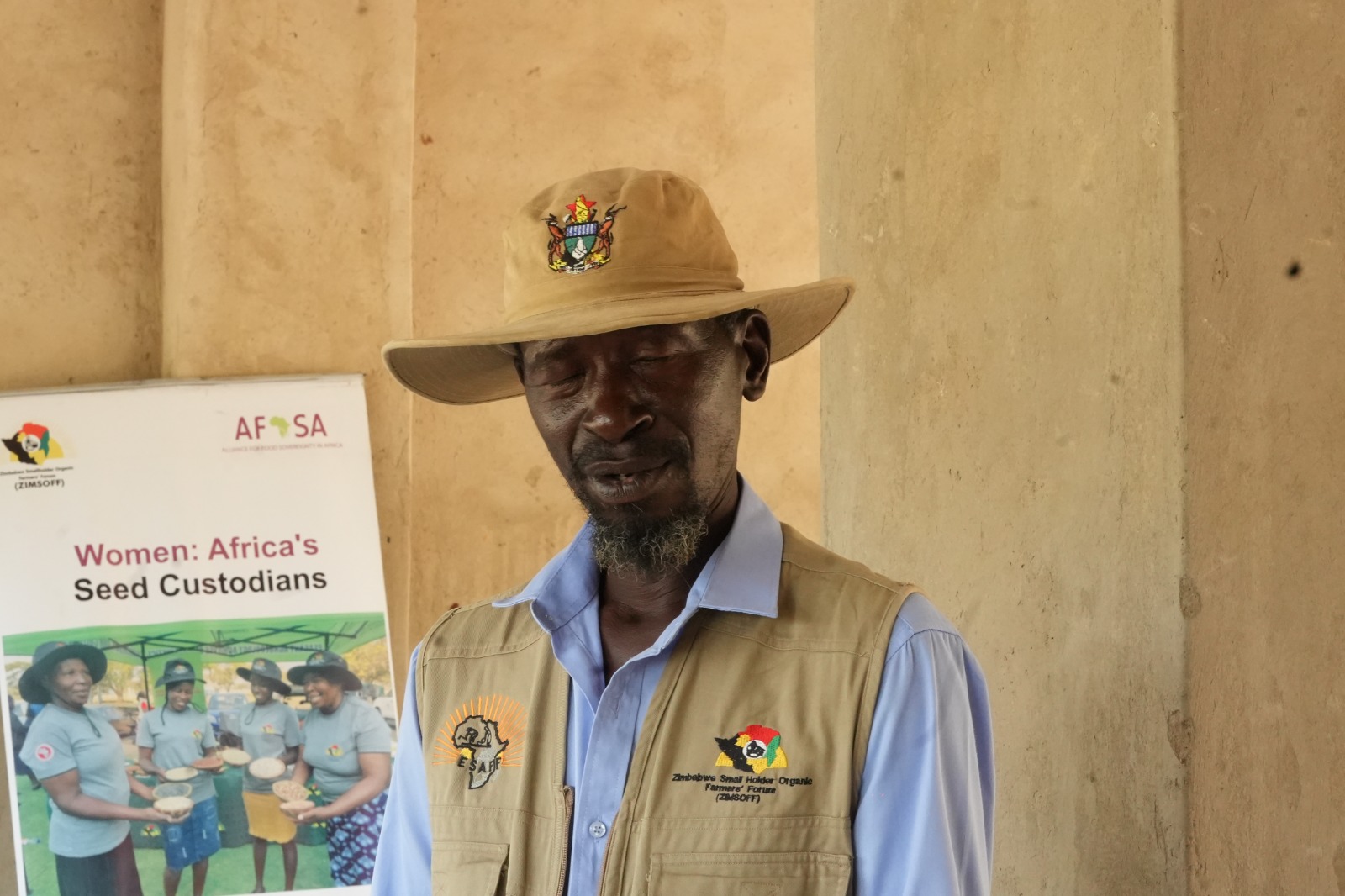
The Zimbabwe Smallholder Organic Farmers Forum (ZIMSOFF) has trained Humanikwa and other farmers in Kawere to grow traditional grains, which are generally more tolerant of high temperatures and dry conditions than maize.
The programme is helping smallholder farmers adapt to climate change, strengthen food security and diversify their incomes, although water shortages continue to threaten their efforts.
A bucket of unprocessed finger millet, commonly known as rukweza, sells for about US$40. Once processed, the price can rise to US$70.
“These crops are nutritious and well suited to hot, dry conditions,” Humanikwa says. “They are gold because they offer farmers an opportunity to generate income while strengthening household food security, particularly as climate change and recurrent droughts continue to affect agricultural production.”
But even traditional grains need water.
The 2023/24 El Niño-related drought severely affected agriculture across Southern Africa. With another El Niño forecast for the 2026/27 season, farmers in Kawere are concerned about renewed rainfall shortages and the impact on their livelihoods.
ZIMSOFF has also trained farmers in income-generating activities, including fish farming, and provided guidance on water management. However, Humanikwa says the training cannot fully address their challenges without reliable water supplies.
“Water shortages remain a serious challenge, and our crops are dying because we do not have enough water to sustain them,” she says.
Shylet Macherenje, 33, who also grows small grains in Kawere, says unreliable rainfall and rising temperatures have exposed the vulnerability of smallholder farmers.
“Prolonged dry spells can damage crops and reduce harvests, threatening household food security and farmers’ incomes,” she says.
Finger millet and rapoko offer farmers alternatives to maize because they are generally more tolerant of heat and dry conditions. However, severe drought can still reduce their yields.
“Better access to water, suitable seeds, agricultural training and other forms of support would help us sustain production and protect our livelihoods,” Macherenje says.
In the same village, 27-year-old farmer Marvelous Chimana is combining horticulture with livestock farming. She keeps pigs, chickens, turkeys and cattle, and uses poultry manure as fertiliser.
“Livestock is an important source of food and income for our households. By diversifying our farming activities, we can reduce our dependence on a single source of livelihood and become more resilient when climate-related challenges affect crop production,” Chimana says.
She says combining crop production with livestock farming improves soil fertility and reduces dependence on purchased fertilisers.
“Combining horticulture, livestock and traditional grain production helps us make better use of the resources available to us. It also strengthens our ability to provide food for our families, even when one farming activity faces difficulties,” she says.
The initiative combines training in drought-resistant crops, agroecology, water harvesting and soil conservation with efforts to monitor public investment in irrigation, rural roads, storage facilities and markets.
Farmers are also being trained in Public Expenditure Tracking Surveys, which allow communities to examine how public funds are allocated and spent.
“Through this approach, farmers can follow how funds are allocated and used, identify implementation gaps and advocate for greater accountability in climate adaptation financing,” Chikowe says.
The programme aims to help farmers engage policymakers on agricultural budgets and climate adaptation plans, with particular attention to women and young people.
The need for accountability extends beyond Kawere. During the 2023/24 drought, Southern African Development Community leaders launched a US$5.5 billion humanitarian appeal to support affected member states. For farmers, the question is whether such resources reach the communities most affected by drought.
In Kawere, women preserve and share traditional seeds while maintaining knowledge of crop varieties suited to difficult growing conditions. Banners carried by ZIMSOFF and the Alliance for Food Sovereignty in Africa reflect this role. One reads, “Women: Africa’s Seed Custodians,” while another declares, “Seed Is Life.”
For Humanikwa, however, adaptation ultimately depends on access to water. Traditional grains may offer better returns and withstand dry conditions better than maize, but they still need sufficient moisture to grow.
“We do not have enough water to sustain them,” she says.
As farmers prepare for the 2026/27 season, water shortages remain an immediate concern in Kawere, highlighting the need for practical climate adaptation measures that support women smallholder farmers and protect their livelihoods.