BY NATHAN GUMA
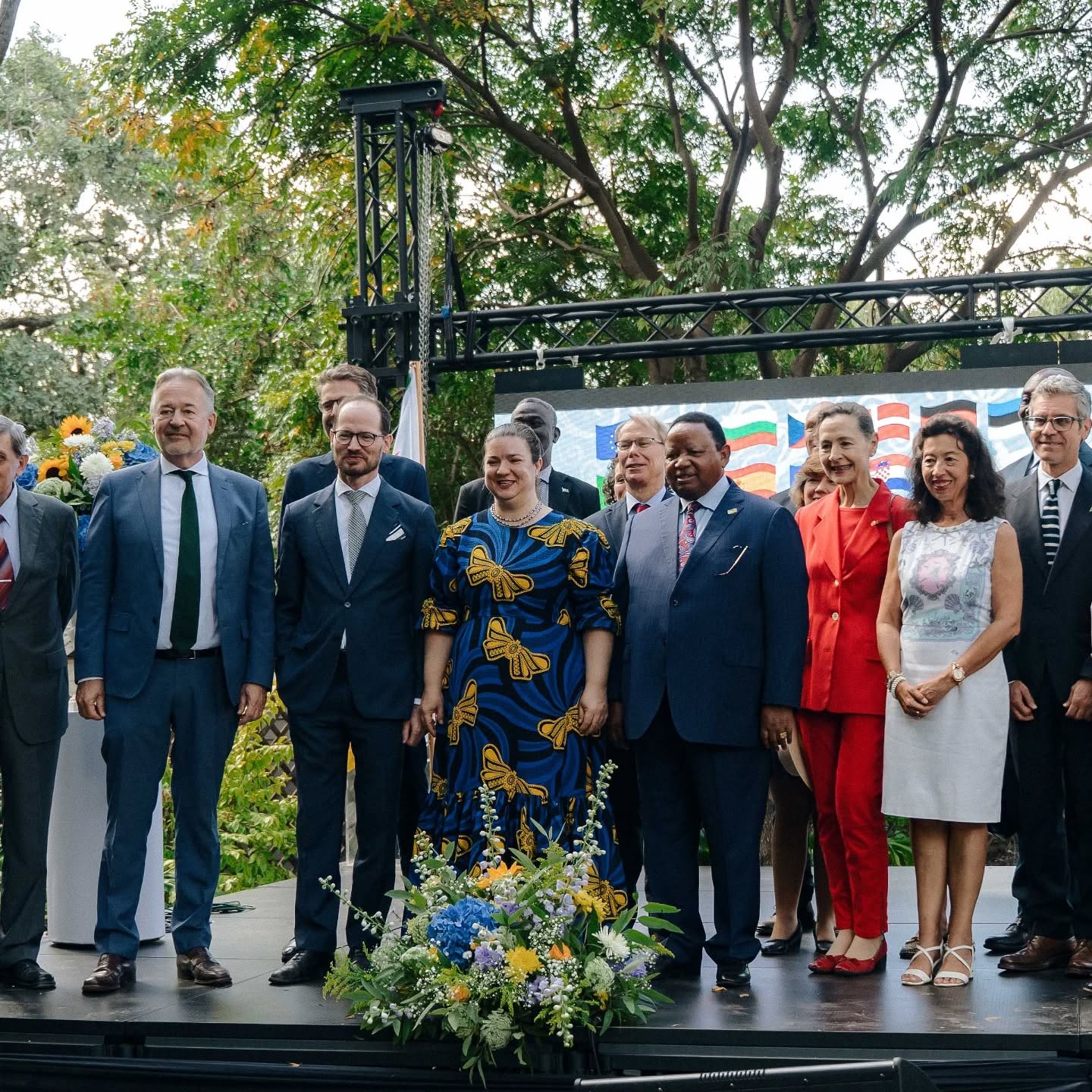
IT is midday, and delegates steadily filter through the leafy roads leading to the European Union Ambassador’s residence in Harare.
Outside, a fleet of vehicles is parked as guests arrive to celebrate EU Day, while inside the compound, flags of European Union member states and the EU Village, featuring cuisines from member states.
The setting is calm and celebratory, as delegates network and mark EU Day, which commemorates peace, unity, and the origins of what is now the European Union.
The bloc, consisting of 27 European countries, was founded through the 1950 Schuman Declaration, which launched European integration.
Among the delegates attending are heads of delegations from across the globe, civil society organisations, political parties, and the private sector.
The event reflects an intertwining of local and European cultures, with EU Delegation Ambassador to Zimbabwe Katrin Hagemann taking to the stage and plays the mbira, a traditional Zimbabwean instrument, drawing a quiet moment of reflection among guests.
Her remarks frame Europe Day as more than a continental celebration, describing it as carrying a message that extends beyond Europe’s borders.
“Europe Day reminds us that peace is possible, that cooperation is stronger than confrontation, and that partnership can overcome even the deepest divisions,” she says.
“Today, that message feels more relevant than ever. We are living through a time of profound global change. The world is more fragmented, more competitive, and more uncertain,” she says.
“Conflicts continue to cause immense human suffering. Russia’s war of aggression against Ukraine remains a clear violation of international law, and conflicts in the Middle East and Sudan, in eastern DRC and elsewhere, remind us of the urgent need to return to dialogue, restraint, and respect for human life.”
These crises, she notes, extend beyond conflict zones, disrupting food systems, energy security, and global stability, with ripple effects reaching Zimbabwe, Africa, Europe, and beyond.
Cooperation, she says, is therefore a necessity, not a choice.
“And this brings me to Zimbabwe. Europe and Zimbabwe are connected by history and by people, and our relationship continues to evolve, grounded in mutual respect and a shared commitment,” she says.
“In today’s interconnected world, the challenges we face, such as climate change, economic uncertainty, food security, or technological transformation, do not stop at borders.”
Africa is described as a key partner for the EU, with Zimbabwe singled out for its heritage, youthful population, and entrepreneurial spirit.
“These are powerful foundations for the future. Our EU-Zimbabwe partnership must be one of equals, grounded in shared interests and values, while allowing for open and constructive dialogue, where our perspectives may differ.
“What does that mean for our partnership? Firstly, we are investing in young people, the bridge between today and tomorrow. Supporting their opportunities is an investment in long-term stability and growth. Secondly, we are promoting good governance, accountability, and inclusive participation.”
The EU continues to strengthen economic ties with Zimbabwe. Since 2012, Zimbabwe has benefited from duty-free and quota-free access to the markets of the 27 EU member states.
“Fair and inclusive trade and investment can create jobs, foster innovation, and open new opportunities,” she says.
Guest of honour, Minister of Higher and Tertiary Education Frederick Shava highlights cooperation between Zimbabwe and the EU across several sectors, including education, gender equality, and creative industries.
He also points to growing collaboration in technology, particularly artificial intelligence and digital transformation, as Zimbabwe advances its innovation agenda.
“Economic diplomacy remains a central pillar of Zimbabwe’s foreign policy. In line with the Zimbabwe is open for business mantra, we affirm our readiness to engage with the European Union and its member states in forging strategic partnerships that advance shared prosperity, that are guided by our enduring principle of being.”
The gathering gradually shifts from formal remarks into informal conversation as guests mingle under shaded lawns, continuing exchanges beyond speeches.
As EU Day draws to a close in Harare, the focus remains on cooperation, dialogue, and the evolving partnership between Zimbabwe and the European Union.