BY NATHAN GUMA
A US$31,000 chrome mining deal by Chinese firm San He Mining has collapsed after the High Court found that the special grants underpinning it had expired months before operations began, exposing loopholes in Zimbabwe’s mining cadastre and poor due diligence by investors.
The case highlights accountability failures with sellers trading expired mining licences, and weak government oversight, revealing systemic risks in Zimbabwe’s mining sector which can be improved by a highly digitalised system.
Under Zimbabwe’s Mines and Minerals Act (21:05), it is the buyer’s duty to confirm the legal status of mineral rights before entering an agreement.
It has reignited debate over the country’s fragmented mineral rights system, where overlapping claims and opaque renewals have undermined investor confidence, prompting calls to digitise and publicly disclose mining title records.
In July, as previously reported by The NewsHawks, Zimbabwe Mining Federation (ZMF) president Henrietta Rushwaya said reforms under the Mines and Minerals Bill would include a cadastre system.
“We will simplify mining titles to three types and establish a mining cadastre register to streamline registration. Designated areas of operation will also ramp production,” she said.
A mining cadastre register is a public record of mineral rights, managed electronically to promote transparency.
Dispute Over Expired Rights
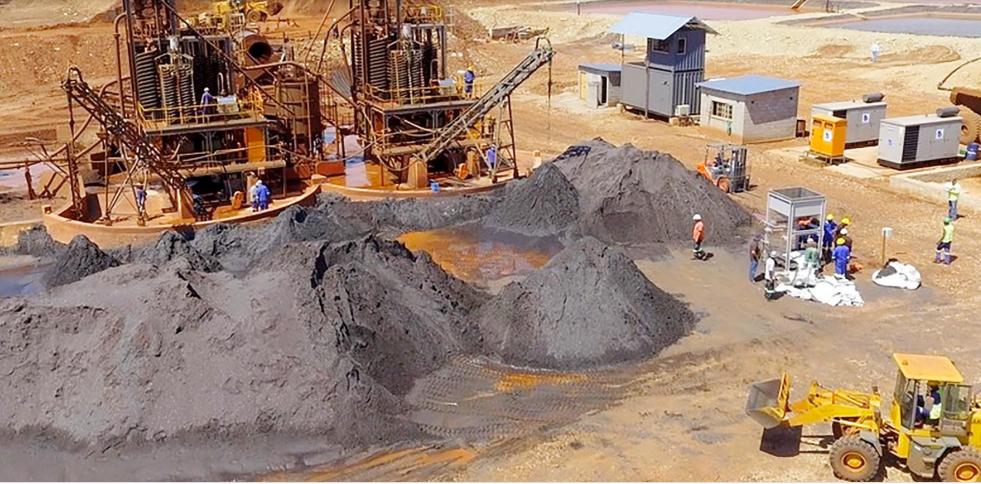
According to a ruling seen by The NewsHawks, the 2022 deal granted San He Mining access to alluvial chrome sites under the Gwasiras’ control.
“In its founding affidavit, the applicant alleged that on 13 August 2022, it concluded a written agreement of sale with the first and second respondents, acquiring alluvial chrome-mining rights over Special Grants SG8340 and SG8341 in Mutorashanga for US$31,000,” the document reads.
“It further alleged that on 20 November 2024, the third respondent, with several workers, entered the mining sites without authorisation and began loading and removing chrome ore.”
By the time judicial relief was sought in late 2024, the legal rights had lapsed.
San He accused Kudakwashe Matevera, another respondent and third party official, of invading the site and removing chrome ore, seeking an urgent interdict to halt operations and declare the 2022 contract valid.
Legal Battle and Arguments
San He argued that the contract should be upheld to prevent the Gwasiras from benefiting from its illegality. Its lawyers also maintained that ownership of already-extracted chrome should remain unaffected, though this claim remains unresolved.
The respondents countered that the transaction was unlawful as the special grants had expired and no formal transfer had been approved by authorities. Mining rights under special grants cannot be transferred without express government consent.
Court Upholds Principle of Legality
Justice Deme ruled in favour of the respondents, stating that courts cannot legitimise contracts contravening statutory law. He noted San He was aware of the grants’ expiry when filing the application, adding that continued reliance on the deal would violate the Mines and Minerals Act.
“It is common cause that the special grants expired. The Applicant attached the special grants to the founding affidavit. Reference is made to pages 30-31 of the record,” it reads.
“Expiry dates are endorsed on such special grants. The two special grants expired on 21 March 2023. Thus, at the time of filing, the Applicant was fully aware.”
The court discharged San He’s declaratory order and provisional interdict, striking off all dependent applications, including attempts to bar the Gwasiras and Matevera from transacting on the site.
Chrome Ore Dispute Referred to Trial
The claim over 200 tonnes of chrome ore remains unresolved. The court found the matter must proceed to a full trial due to material disputes of fact.
“This court observed that where special grants have expired, the parties can no longer continue with the contract, as doing so would be against the law,” reads the judgement.
“After the expiry of the special grants, I am unable to find any reason why the agreement can be declared valid and binding.”
Justice Deme directed San He to file a formal declaration with the High Court to pursue recovery of the ore under standard trial procedures.