BY NATHAN GUMA, from the UN Headquarters
UNITED Nations Secretary-General António Guterres has called for international cooperation and a coordinated global effort to make artificial intelligence safe, transparent and accountable, with human dignity at the centre.
This comes at a time when AI governance is gaining urgency at the UN, with discussions focusing on safety, equity, human rights and international cooperation.
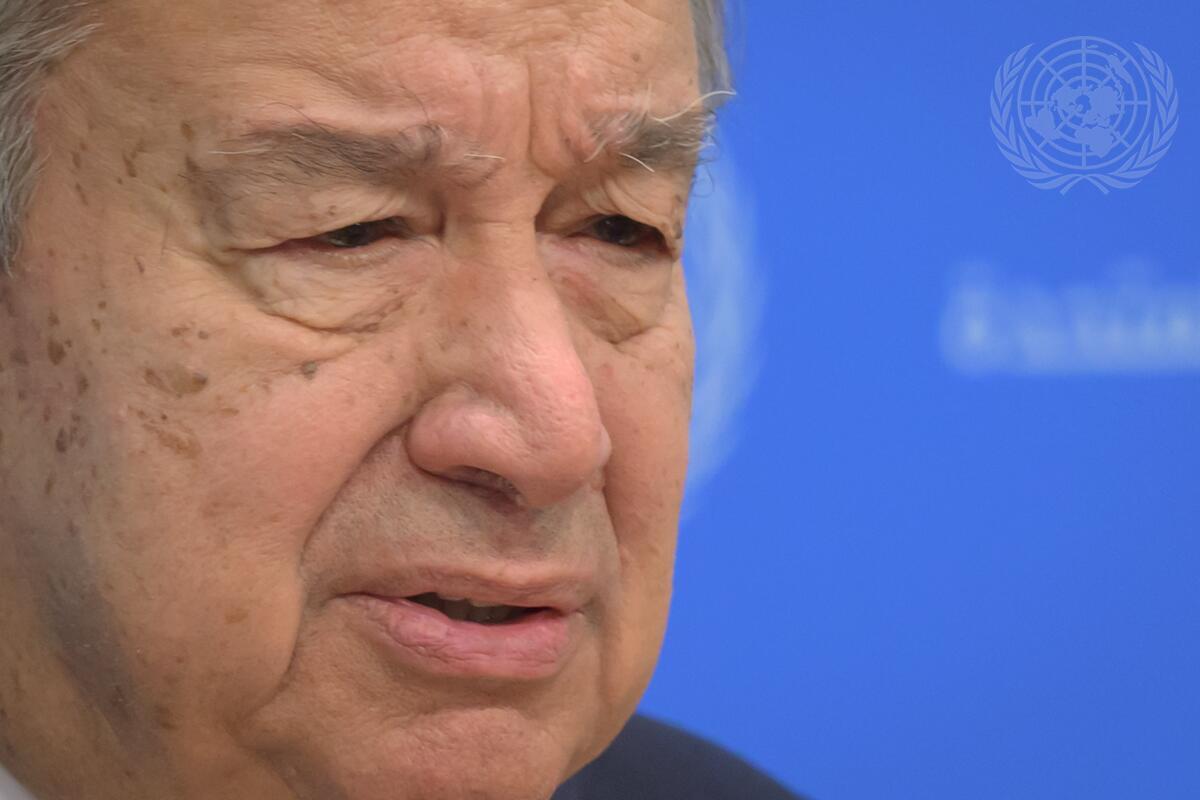
Speaking at his final press conference before the high-level week of the 81st United Nations General Assembly, Guterres said the world could not afford to ignore concerns over the pace at which AI is developing.
He said AI had enormous potential to accelerate progress in areas including health, education and climate, but warned that its development was progressing faster than human understanding of its risks.
“We need a shared understanding of how to advance the safe, secure, and responsible development of AI, while identifying when increasingly powerful systems may require stronger safeguards, or additional measures to manage potential risks,” he said.
Guterres said responsible AI development would require genuine international cooperation and a coordinated global effort.
“I am aware of the geopolitical divides and the temptations they might generate,” he said. “But the world cannot afford a race to the bottom on AI safety. We need guardrails to build trust, and that make AI safe, transparent, accountable, with human dignity at the centre.”
He said the world faced three existential threats, runaway artificial intelligence, the climate crisis and deepening inequalities, making international cooperation more important than ever.
Guterres said governments should not leave responsibility for making AI safer entirely to technology companies or voluntary commitments.
“Governments must assume their responsibilities,” he said. “It is the first responsibility of any government to protect its citizens, including from the threats of artificial intelligence.”
He also warned that voluntary pauses on AI development would not work if they were isolated or limited to only a few countries.
“Voluntary pauses that are isolated, unverifiable and unevenly applied will not address the problem,” he said. “If we believe AI development should slow when risks become too great, we need more than good intentions.”
Guterres said the UN Independent International Scientific Panel on AI would provide scientific expertise to inform global discussions on the technology’s opportunities and risks.
The panel was established by the General Assembly in 2025 and is intended to provide policymakers with independent scientific assessments of AI developments and their risks.
He said countries needed to establish when increasingly powerful AI systems might require stronger safeguards or additional measures.
The issue is complicated by geopolitical divisions, with countries competing to develop AI while also being asked to address risks created by the technology.
Guterres warned that this competition should not result in weaker safety measures, calling for global guardrails to build trust and ensure AI remains safe, transparent and accountable.
The discussions come as governments grapple with how to benefit from AI while putting safeguards in place against risks that are not yet fully understood.