HARARE, 28 November 2026
Zimbabwe has urged African trade ministers to stop debating the African Continental Free Trade Area (AfCFTA) and start implementing it, saying poverty is the continent’s “greatest enemy” and trade its “survival pipeline”.
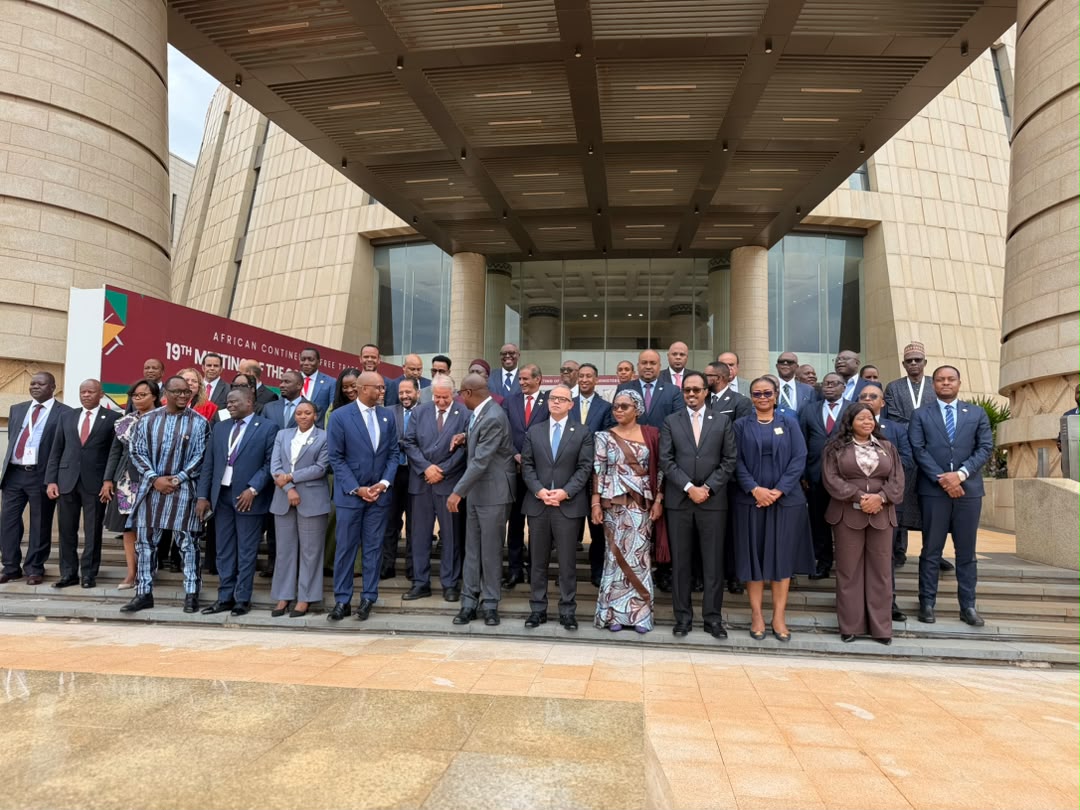
Officially opening the 19th meeting of the AfCFTA Council of Ministers responsible for trade in Harare, Prof. Amon Murwira, of the Ministry of Foreign Affairs, speaking on behalf of President Emmerson Mnangagwa, said the agreement would only work if countries followed through on what they had signed.
“Our free trade area needs to be implemented, not debated,” the minister said, warning against the tendency of signing up protocols, and then delaying or hesitating to implement them,” said Murwira.
He asked delegates to make the meeting a “Council of Results”, concluding outstanding negotiations and finalising the remaining operational instruments.
The minister said Africa must move away from a colonial model in which the continent was “dug” and its resources shipped out in raw form. “Transformation is not the same as change,” he said. Exporting 20 million tonnes of raw lithium instead of 10 million would merely be change; real transformation meant building value chains where the raw materials are found.
He pointed to Zimbabwe’s ban on raw mineral exports, saying investors who want the country’s lithium must build processing plants locally. Zimbabwe produced and exported its first lithium salt in April, he said, and mineral revenue had grown from US$243 million to US$1.2 billion since the policy shift. He tied the approach to Zimbabwe’s goal of becoming an upper middle-income economy by 2030.
Calling for market access to match tariff commitments, he urged ministers to remove the barriers that “still hold us back” and to back small and medium enterprises, especially those led by women and youth.
He also questioned laws inherited from the colonial era. “If the rules are 1930s, you must know that you are just an African group running a colonial economy,” he said, adding that Africa’s real economy “is based on our rules, which make our people prosperous.”
Welcoming delegates, the minister said Zimbabwe hosts such meetings “out of conviction, as a matter of national policy and as a constitutional duty,” citing Section 12(2) of the Constitution, which requires the State to promote regional and pan-African integration.
The AfCFTA is meant to create a single market of 1.4 billion people across 55 countries. “We are politically independent. Our fight is the economic independence,” the minister said, urging Africa to channel anger into strategy. “We are not here to discuss Africa’s future. We are here to build it.”
The checks from my earlier note still apply: confirm the speaker’s name and title, the “upper middle-income” wording, the US$243 million to US$1.2 billion figures and their timeframe, and every quote against the recording.