How Dr. Gilbert Tarugarira is promoting peace education through US-Zimbabwe collaborations
BY NATHAN GUMA
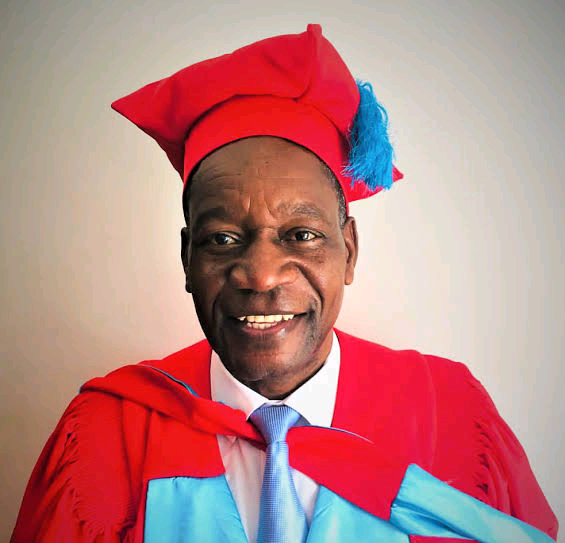
WHEN Dr Gilbert Tarugarira joined Midlands State University (MSU) as a lecturer in the Department of History and Development Studies, he was determined to find ways of promoting peace.
One of his main goals was to incorporate peace education, which, instead of propagating violence, would cultivate peace for development and produce learners who are aware of societal injustices and actively involved in addressing them.
“Before joining MSU, I had taught several modules, but still had the hunger to establish how a fractured history could be used to unite a nation,” he says.
Today, Dr Tarugarira is spearheading peace education initiatives, drawing on insights gained during his Fulbright exchange at the University of Toledo in Toledo, Ohio, a public research university in the Midwestern United States.
The programme under the US Department of State’s Bureau of Educational and Cultural Affairs funds study and research to increase mutual understanding.
He says his passion was also driven by ethnic clashes in Zimbabwe, which inspired him to pursue peace education as a tool for sustainable development.
According to the International Institute of Peace (IEP), while Zimbabwe’s peace ranking has improved overall from 148th in 2009 to 114th in 2025, yet remains below the global average as worldwide peacefulness is declining.
The data also shows that Zimbabwe’s was trailing regional neighbours in 2025.
Dr. Tarugarira has been seeking to change the peace narrative through education.
When he was promoted to Executive Dean of the Faculty of Education, an opportunity arose to pursue the introduction of a degree programme in Peace Education.
“Initially we sought ways of rebranding our History-aligned modules so that peace education would get accommodated,” he says.
“In my professional journey, I have been involved in reviewing curricula at various levels and participated in UNESCO-led initiatives in Curricula Harmonization in Zimbabwe and transformative pedagogy for sustainable development in the context of teacher development in Zimbabwe.”
Before Fulbright, he had already been MSU’s focal person coordinating a project on Capacity Development for Agenda 2030 for teacher education involving universities in Zambia and Zimbabwe.
Using US Connections to Bridge the Peace Gap
Since his return, Dr Tarugarira has played a key role in promoting peace education in Zimbabwe and is working on important material that will be crucial in advancing peace education.
“By virtue of being a member of the University Senate, the University Council, I sit in a number of committees which make contributions for the development of the University,” he says.
Together with his Peace Education mentor, Prof Dale Snauwaert of the University of Toledo, he has formed a network of Peace Education specialists who have contributed towards the writing of a book, An International Handbook for Peace Education.
“I have contributed an article to the Research Topic: Reimagining Peace Education in a Fragmented World: Democratic Participation, Civic Agency, Democratic Futures and Conflict Prevention. This is a collection of collaborative work by a network of scholars whom l associated with,” he says.
He has also championed the introduction of Peace Education into Zimbabwe’s primary and secondary school curricula, and the proposal continues to gain momentum and support.
In collaboration with the MSU Faculty of Education, Dr Tarugarira says efforts are already underway to design a degree programme in Peace Education for accreditation by the Zimbabwe Council for Higher Education (ZIMCHE).
“The journey is tough but am sure that we will get to our desired destination,” he says.Dr Tarugarira says he has also experienced growth in his work, overseeing more leadership development responsibilities.
“The Campus I superintend over is at its infant stage but is poised for tremendous growth. By 2028, it should be the home of the Faculty of Law, Faculty of Built Environment, Art and Design and the Faculty of Agriculture and Natural Resources Management,” he says.
“It is a bigger space with more responsibilities which demand higher order decision making skills.”
Lessons from the US
Dr Tarugarira says he has been keen on helping improve the quality of education in local institutions using lessons from the United States.
“Universities abroad have an approach which is different from ours,” he says. “Our universities are somehow removed from the communities whose problems they have to solve.”
“They are isolated and insulated from the populace. They are elitist and this explains why they cannot come up with cutting-edge innovations/inventions capable of changing people’s quality of life.”
He says the education system that feeds local universities needs realignment as it is far removed from realities, with little motivation for innovation.
Data shows that while there has been an increase in research on crucial issues like AI, this has been done at a slower pace.
“What makes matters worse is that the universities are poorly resourced. No funding for research, no bursaries for high flyers, no autonomy-they have to follow political swings be they suicidal or not.”
He says, on the contrary, universities in the US are well funded, well equipped and operate in environments conducive to learning and research, while their community engagement enables them to be intricately woven into society.
“And, this explains why shops, garages, factories are also owned by the university. The universities have an entrepreneurial drive. Alumni networks are very active. People donate money, buildings and even their bodies (for research in the medical field),” he says.
He says that while, through Education 5.0, local universities now have business units to mobilise resources, create sustainable income streams and contribute to industrialisation, poor funding remains a challenge.