BY NATHAN GUMA in New York
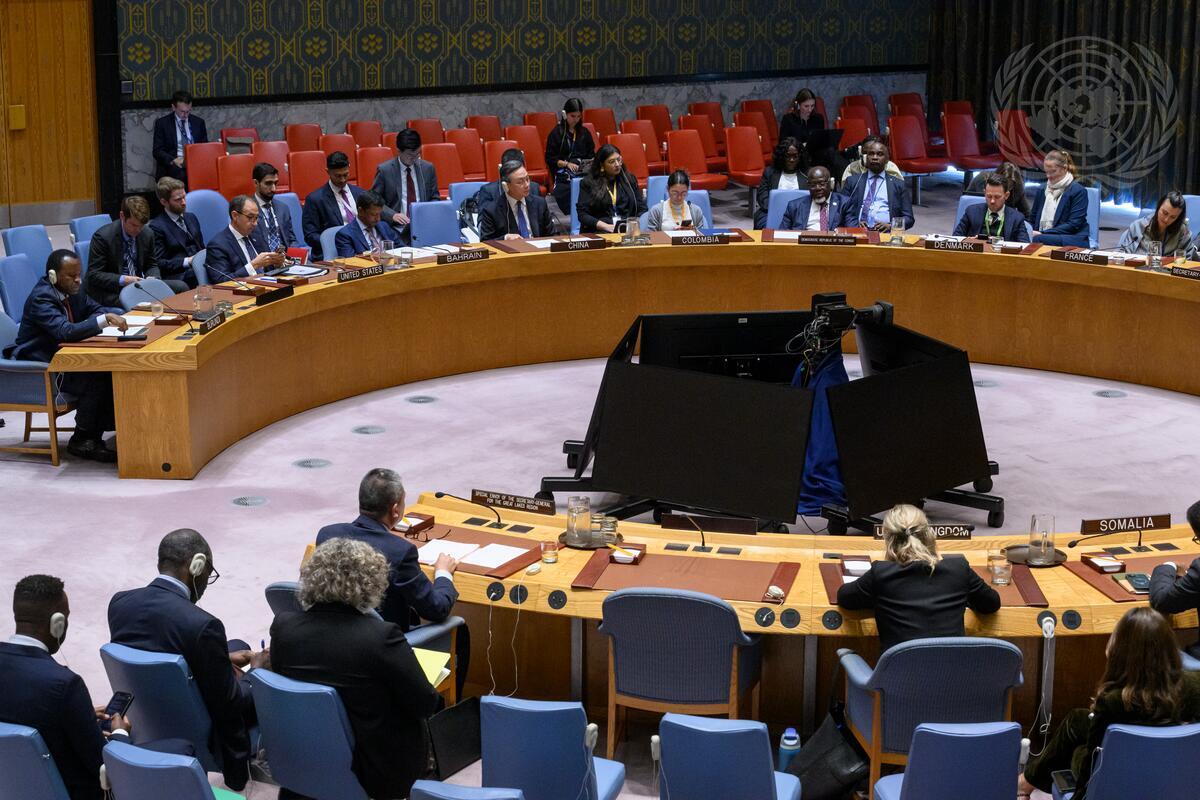
The United Nations Security Council has warned that illicit mineral trafficking in the Great Lakes region continues to finance armed groups, as regional ministers endorse recommendations to strengthen controls over natural resource exploitation.
The warning comes as the Democratic Republic of the Congo (DRC) continues to grapple with conflict in its eastern provinces, where competition over natural resources has become intertwined with insecurity and regional tensions.
Kinshasa has been struggling to restore its authority over territory contested by the Mouvement du 23 mars (M23) and other armed groups while averting a wider regional confrontation.
While mediation efforts have included the Washington peace agreement and the Qatar-facilitated Doha process, progress has been slow.
Addressing the Security Council, Juan Xia, the UN Secretary-General’s Special Envoy for the Great Lakes Region, called for stronger regional mechanisms to improve transparency, traceability and accountability in mineral value chains.
Xia said his office had organised an exchange of best practices in Lusaka on 8 October, in partnership with the International Conference on the Great Lakes Region (ICGLR) and the Kimberley Process Secretariat, to strengthen regional efforts against the illegal exploitation of natural resources.
“The recommendations arising from these exchanges have been endorsed by the Ministers of Mines of ICGLR Member States,” Xia said.
He said strengthening the regional initiative against illegal exploitation, particularly its regional certification mechanism, was necessary to address the structural drivers of conflict.
The mechanism is intended to improve accountability and traceability in mineral supply chains, although the briefing did not detail the specific reforms endorsed by the ministers or how they would be implemented.
The United Kingdom warned that illicit mineral trafficking was undermining both security and economic development in the region.
“The ongoing illicit exploitation and trafficking of critical minerals in the region sustains armed groups, undermines trust, and deprives communities of legitimate development,” said Kate Foster, the UK’s Deputy Permanent Representative to the United Nations.
Foster called for stronger traceability and certification mechanisms, arguing that mineral wealth should benefit communities rather than prolong conflict.
“The development of critical minerals should reach local communities, not drive conflicts,” she said.
France also highlighted the link between illegal resource exploitation and the financing of armed groups, saying the practice continued to deprive local populations of wealth generated from their natural resources.
“The Council must remain actively seized of the situation by exercising pressure on the parties so that they uphold their obligations and commitments,” said Jérôme Bonnafont, France’s Permanent Representative to the United Nations.
Pakistan similarly described the illicit exploitation and trafficking of natural resources as structural drivers of instability, calling for stronger regional cooperation, transparency and traceability.
The Pakistani representative said natural resources should become a source of shared prosperity rather than conflict, stressing that implementation remained a central challenge.
“The illicit exploitation and trafficking of natural resources also remain structural drivers of instability,” said Usman Jadoon, Pakistan’s Deputy Permanent Representative to the UN Ambassador.
“Strengthened regional cooperation, transparency, and traceability are essential to ensure that the region’s natural wealth becomes a source of shared prosperity rather than conflict.”
Zenon Ngay Mukongo, the DRC’s Permanent Representative to the UN, said illicit resource exploitation had further weakened state control.
“Aside from the security front, lasting peace requires addressing the root causes of regional instability,” Mukongo told the Security Council in a statement on behalf of the three African members of the Security Council: Liberia, Somalia and the DRC.
“Illicit resource exploitation and trafficking, is helping to fund armed actors, it’s weakening state authority and depriving communities of their wealth. The A3 calls for stronger regional cooperation on traceability, verification, oversight, certification, border management, as well as responsible mineral supply chains.
He said this should also ensure that accountability extended beyond the region, and that natural resources fostered cooperation and development rather than confrontation.
In June, the US Treasury sanctioned Kigali-based Gasabo Gold Refinery, accusing it of processing gold extracted by the Rwanda-backed M23 militia in the DRC.
The European Union had sanctioned the refinery in March 2025.
The US also sanctioned Gasabo chairman Jean Malic Kalima, general manager Bosco Kayobotsi and three Rwandan mining companies over alleged links to M23 and the Rwanda Defence Force, accusing them of exploiting gold mines in South Kivu to finance the conflict.