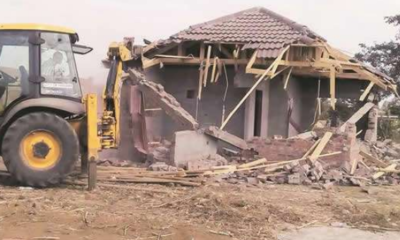
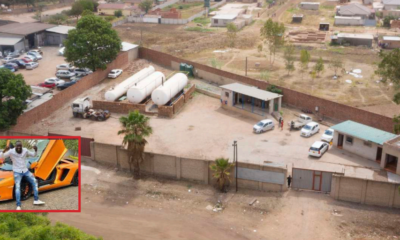
Following yesterday’s 14-day ultimatum for partially regularised settlements to have the owners fully comply, we have noted frequently asked questions from residents and the media. Our Corporate Communications Manager Stanley Gama responds to some of the issues raised:
Question: What prompted the City of Harare to issue the 14-day ultimatum, and how many property owners and beneficiaries of settlements across the City are affected by the enforcement measures?
Answer: The City is grappling with serious legacy issues in land management resulting from the 2004 Parallel Development Policy whose main focus was to provide decent and affordable human shelter. The policy was manipulated by land barons resulting in massive land invasions, and illegal development of settlements without adequate social amenities like water, sewer, schools and health facilities. The land barons continued in that modus operandi, duping many people of their hard-earned money. The City moved to regularise these settlements starting 2017, but some ignored the City intervention and continued with their illegal practice. The continued general state of lawlessness in the City in terms of land management forced the City to issue this warning for the final and last time. The level of disrespect for authority is appalling. We cannot have a City with land barons who resent authority. Land barons have gone too far. This enforcement action is meant to rehabilitate those who operate as if there is no authority in Harare.
Question: How many illegal structures are earmarked for demolition, which suburbs or settlements are targeted, and when will the demolitions begin once the deadline expires?
Answer: The City of Harare has no appetite to demolish people’s homes. We want to regularise them. Across the City very few properties can be negatively affected as they are developed in the sensitive areas and can not be regularised. Our initial assessment indicated that less than 100 properties across the City can be affected but the exact number will be informed by compliance levels and demolitions will commence at the expiry of the 14 day compliance period but as a last resort.
Question: How much are affected property owners expected to pay in regularisation penalties, land value charges and infrastructure development costs, and what payment arrangements has Council put in place to help them comply?
Answer: A minimum of USD 1,500 or equivalent in ZIG . The exact amount is determined by the levels of breach. Breaches are in various forms and shapes. Some have illegally built structures on properly allocated land, some have illegally built structures on private land and state land, some have illegally invaded Council land and built on it, whilst some have illegally constructed water and sewer reticulation and illegally connected their fittings to municipal services and are consuming Council services for free. All these attract different penalties. The City accepts payment plans and has even extended deadlines for payment of penalties to allow the affected more flexibility. However the City is alive to the reality that non compliance with the law must not be affordable otherwise the motivation to be law abiding can be diminished if non-compliance is not punitive.
Question: What progress has the City made in regularising the affected settlements, and what challenges have delayed compliance with requirements such as approved building plans, roads, water supplies and sewer infrastructure?
Answer: The City registered progress especially on those settlements developed on private land. The developers were forthcoming. Good examples are Chiremba Park, Masasa Park and Audor Investment in Southlea Park. But in the case of municipal and state land, progress has been slow because regularisation has not been paired or complimented with enforcement. The defaulting residents have not been forthcoming and hence our decision to escalate the compliance a gear up. The City is more than ready to facilitate this process. The City has decentralised its services including plan approvals in an attempt to engender the ease of doing business in the City.
Question: How will the City balance enforcement against illegal structures with protecting residents who may have bought stands in good faith from housing cooperatives or land developers, and what measures are in place to prevent further illegal land sales and construction?
Answer: The regularisation exercise is an exercise with a human face. We recognise that not all people are allergic to authority. Some are innocent victims. But they became complicit to their situation and this is why we have extended the regularisation hand to them to redeem themselves. It is up to them to own up and pay for the required penalties and have their illegal actions and investments legalised.
Conclusion: Plans are there to avoid further illegal activities. Enforcement will be immediate. Illegal construction is to stop forthwith. Law enforcement agents have been put on high alert and we will be working closely with them to ensure that we weed out bad apples.