By Staff Writer
HARARE — Three years after a devastating fire reduced its warehouse to ashes, clothing manufacturer Paramount Garments is still battling to recover its insurance claim — exposing deep cracks in Zimbabwe’s insurance sector and raising questions about regulatory oversight.
The High Court of Zimbabwe on Friday issued a Writ of Execution against moveable property belonging to Alliance Insurance Company after the insurer failed to honour a settlement agreement with Paramount Exports (Private) Limited.
The writ marks the latest escalation in a protracted dispute stemming from a December 2023 inferno that destroyed Paramount’s three-storey, 8 000 square metre warehouse in Southerton, and millions of dollars worth of stock.
Paramount’s claim — initially pegged at approximately US$11,77 million for stock loss — has been mired in disputes, arbitration, and litigation, despite Alliance having accepted liability as early as January 2024.
The insurer had initially offered just over US$4 million as a full settlement — a figure Paramount rejected, triggering arbitration proceedings as stipulated in the policy.
In a decisive ruling in December 2025, an arbitrator awarded Paramount about US$11,7 million, effectively affirming the company’s claim.
However, Alliance moved to challenge the award in court, filing its application on the final permissible day — further delaying payment.
Even a partial award of US$4 million, deemed undisputed, has not been honoured.
In March 2026, both parties entered into a settlement agreement — registered by the High Court — compelling Alliance to pay US$4 million plus interest and legal costs within 10 working days.
That deadline came and went without payment.
The issuance of the writ now allows for the seizure of Alliance’s assets — a rare and dramatic step that underscores the severity of the dispute.
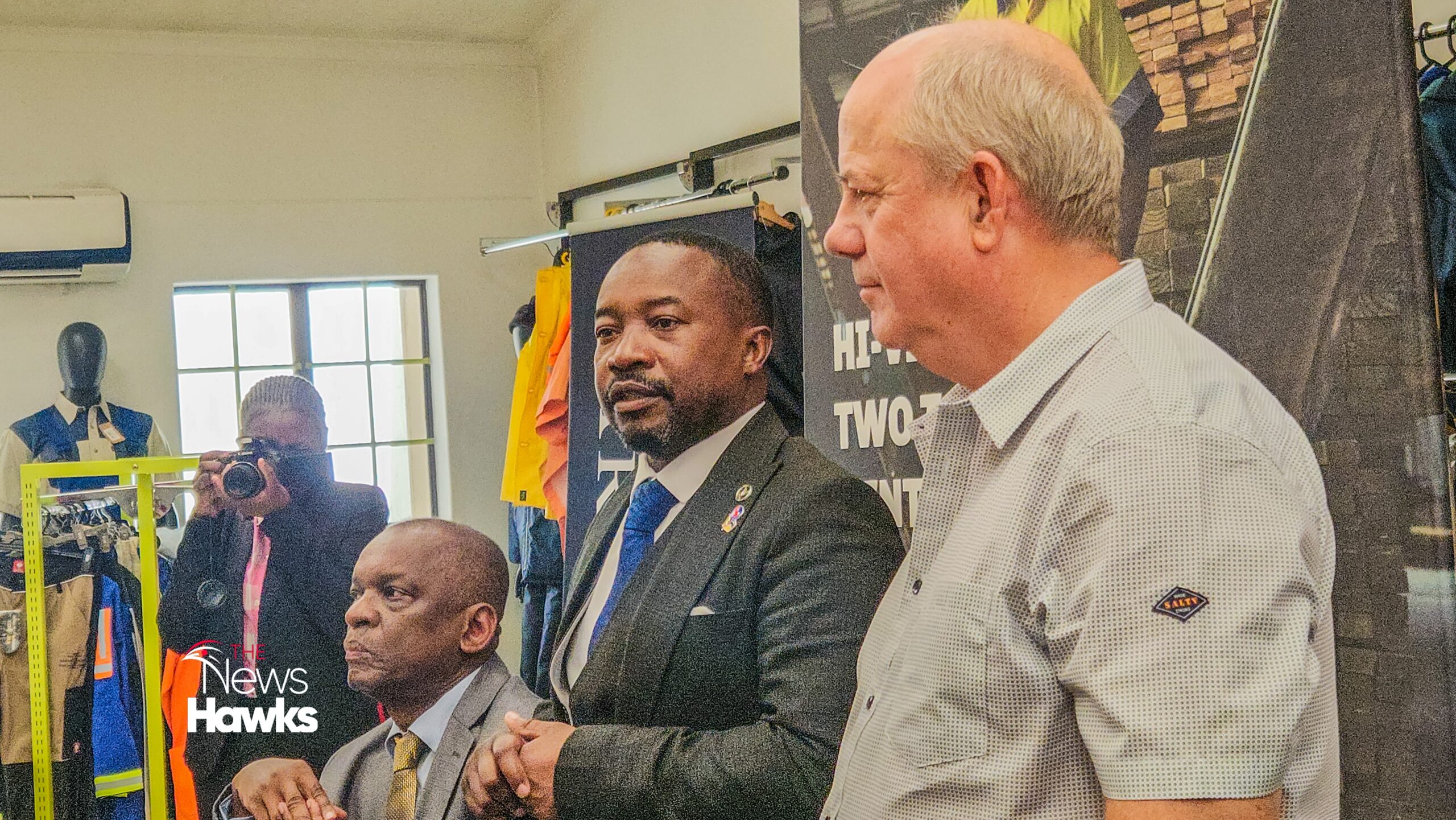
Paramount director Jeremy Youmans did not mince his words.
“The insurance sector is clearly in deep, deep trouble,” he said.
“We paid premiums based on over US$50 million of cover. Our stock alone was insured for US$14,6 million. How can the industry fail to pay even US$4 million — let alone the full claim?”
Paramount director Jeremy Youmans
Youmans questioned the viability of Zimbabwe’s insurance model, warning that failure to settle legitimate claims undermines investor confidence.
“How can we claim to be open for business when investors cannot protect their assets? The premiums were paid, but the cover is not there,” he said.
Paramount director Jeremy Youmans
The case is further complicated by the involvement of multiple reinsurers, including Emeritus Re, First Mutual Re, FBC Re, ZB Re, Tropical Re, Grand Re, ZEP Re and WAICA Re, who underwrote significant portions of the risk.
Despite indications that at least one reinsurer had mobilised funds towards the US$4 million partial payment, Paramount says no money has been received to date.
The dispute has also placed the spotlight on the Insurance and Pensions Commission (IPEC), the sector regulator, which Paramount accuses of failing to act decisively.
Youmans revealed that complaints had been lodged with IPEC multiple times without meaningful response.
“Our brokers met IPEC and were told Alliance had been instructed to honour the arbitral award and not appeal. They ignored that,” he said.
“They have acted with impunity — towards the courts, arbitrators, policyholders and even the regulator.”
The lack of enforcement raises broader concerns about the regulator’s ability to police the industry and protect policyholders.
Beyond the legal battle, the financial strain is already evident.
Paramount says it has scaled down operations, with its workforce shrinking from a planned 3 000 employees to about 2 000 due to stalled reconstruction and cash flow constraints.
No work has begun on rebuilding the destroyed warehouse, despite a High Court ruling ordering reinstatement within six months.
Meanwhile, business interruption costs and interest on unpaid claims continue to mount.
The case lays bare a deeper crisis within Zimbabwe’s insurance sector — one that could have far-reaching implications for industry, investment, and economic recovery.
Alliance has argued in court papers that paying the full claim could destabilise the insurance industry, raising questions about whether firms are adequately capitalised to meet their obligations.
For Paramount, the conclusion is stark:
“We do not have insurance cover in Zimbabwe,” Youmans said.
“We are all exposed to risk — and the premiums paid were wasted.”
As the legal battle intensifies, the outcome of the case could become a defining test of Zimbabwe’s financial sector credibility — and whether institutions meant to protect businesses can be trusted to do so.