
News
Mnangagwa Deadly Counters Chiwenga
Today’s changes will energise Mnangagwa’s 2030 campaign, while leaving Chiwenga with a mountain to climb in his presidential ambitions, yet escalating the succession wrangle to deadly proportions

Succession Battle Now A Dangerous War
In a dramatic and fierce counter-attack against Vice-President Constantino Chiwenga ahead of Zanu PF’s crucial annual conference in Mutare next month, President Emmerson Mnangagwa has reshuffled the supreme organ of the decision-making Central Committee – the politburo – removing secretary-general Obert Mpofu and replacing him with his close ally Jacob Mudenda who was treasurer-general.
Mpofu is Chiwenga’s pivotal political ally, while Mudenda supports Mnangagwa.
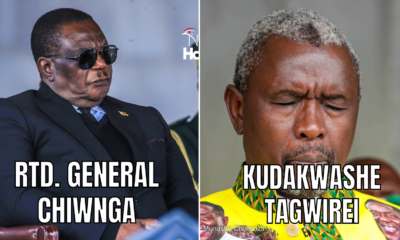
This comes after Chiwenga last week confronted Mnangagwa before and during the politburo meeting, accusing him of working closely with a corrupt cabal of “Zviganandas”- dodgy businessmen – whom he said included Kudakwashe Tagwirei, Wicknell Chivayo, Pedzisayi “Scott” Sakupwanya, Tempter Paul Tungwarara and others.
Chiwenga demanded that Mnangagwa must address rampant corruption and arrest his business cronies whom he accused of tarnishing the party image through corruption and destroying the economy.
Angered by that frontal challenge, Mnangagwa subsequenlty unleashed Zanu PF spokesperson Chris Mutsvangwa on Chiwenga yesterday.
Mutsvangwa defended Mnangagwa and Tagwirei in his address, while attacking Chiwenga.
Today, Mnangagwa delivered a heavy blow against Chiwenga through unprecedented politburo changes.


Legal Affairs secretary Patrick Chinamasa, another critical Mnangagwa loyalist, replaces Mudenda as treasurer-general, a position he previously held in 2020 as secretary for finance.
Ziyambi Ziyambi, another Mnangagwa diehard, takes over from Chinamasa as legal affairs secretary. Mpofu replaces Ziyambi at ICT.
The changes are designed and calculated to block Chiwenga’s presidential ambitions and propel Mnangagwa’s 2030 agenda in the increasingly explosive and deadly Zanu PF succession battle.
Chiwenga told Mnangagwa last week that despite his repeated denials, it is now clear to him that the President is part of the 2030 agenda to extend his rule beyond his 2028 second term constitutional limit, or to get a third term.
In March, Mnangagwa abruptly removed Chiwenga’s key military ally Lieutenant-General Anseelem Sanyatwe from his position as Zimbabwe National Army commander and deployed him as Sports minister to replace Kirsty Coventry who is now International Olympic Committee president amid fears of a popular uprising backed by the armed forces.
That seriously weakened Chiwenga’s leverage in the army, a key power broker in Zimbabwean politics.
Mnangagwa came to power in November through a coup fronted by Chiwenga, but soon after that he purged many allies of the former Zimbabwe Defence Forces boss to put his own people to consolidate power.
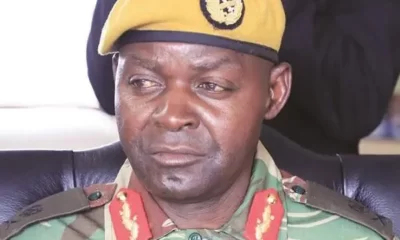
Mnangagwa does not want Chiwenga to succeed him. His preferred successor is not yet known, but Tagwirei and current Zimbabwe National Army commander General Phillip Valerio Sibanda’s names are up the list.
Sibanda is particularly fancied by Mnangagwa for different reasons.
Today’s changes will energise Mnangagwa’s 2030 campaign, while leaving Chiwenga with a mountain to climb in his presidential ambitions, yet escalating the succession wrangle to deadly proportions