BY BRENNA MATENDERE
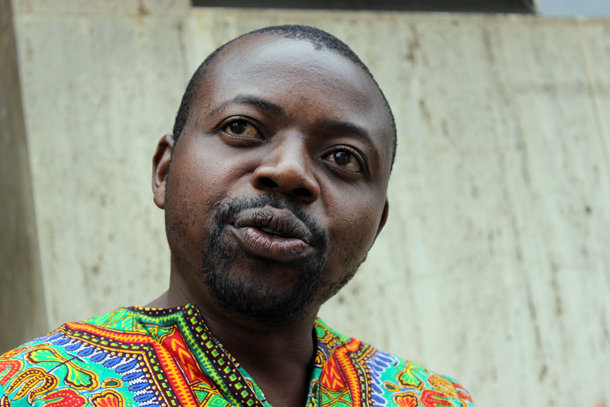
Amalgamated Rural Teachers Union of Zimbabwe president Obert Masaraure has released a lengthy response to Zimbabwe Communist Party (ZCP) secretary general Ngqabutho Nicholas Mabhena after his scathing views on political developments in Zimbabwe.
Part of Mabhena’s commentary shared on social media suggested the Zimbabwean government will not reform itself out of power and insisted people must forget about implementation of electoral reforms as well as the National Transitional Authority as a means of facilitating the holding of free and fair elections in Zimbabwe.
Previously, Mabena and his party supporters had received criticism for donning T-Shirts with photos of Russian President Vladimir Putin and Burkina Faso’s transitional leader Ibrahim Traoré.
Masaraure’s full response below:
Thanks Cde Ngqabutho Nicholas Mabhena for being open to debate. The political space in Zimbabwe doesn’t promote debate. This will however be my last response to you. I don’t want to divert you from the critical party work you are doing…
For years, Zimbabwe and the rest of the Global South have endured plunder and exploitation by foreign powers, particularly from the Global North. Our commitment to fighting against neocolonialism and imperialism is unwavering, and we honor the forebears like Nkrumah, Lumumba, and Sankara who courageously confronted this beast.
While we are not ahistorical, our analysis must be scientific. The critical question today is whether the Zimbabwe Communist Party (ZCP) is becoming a fan club for leaders like Vladimir Putin, Traore and a blind admirer of China.
The Problem with Blind Loyalty
We acknowledge the significant support China and Russia gave us during our fight against colonialism, especially at the height of the Cold War. However, we must not let this past support blind us to the present.
Post-USSR Russia has adopted a model that created oligarchs through state tenders, much like how Zimbabwe has produced figures like Tagwirei and Wicknel.
Both Russia and China have also developed extensive trade relations with the West, and many U.S. companies now operate in China. Why should Zimbabwe remain stuck in a Cold War-era mindset, being angry on behalf of Russia when Russia itself is trading with the West?
Our struggle is against capitalism, not just the West.
Capitalism is an evil system that polarizes society, creating rich and poor people and, by extension, rich and poor countries.
Using the World Systems Theory, we see a new form of exploitation emerging. China is now a core producer of electric vehicles, while Zimbabwe is on the periphery, supplying cheap lithium. We’ve seen Chinese companies in Zimbabwe destroy the environment, evade taxes, exploit workers, and displace villagers. The Chinese state, like the World Bank and IMF, uses debt traps to force compliance. This is a form of imperialism.
As revolutionaries, we must condemn imperialism indiscriminately. There is no such thing as “good” imperialism. We condemn U.S. imperialism just as we condemn Chinese imperialism.
The Shared Struggle of the Working Class
In the heart of the imperialist beast—the U.S.—workers are denied healthcare, education, and a dignified life. The struggles of workers in Harare, São Paulo, New York, London, Shanghai, and Moscow are the same. They are all victims of the same capitalist system.
When war breaks out, the military-industrial complex benefits, while workers lose their freedoms and lives.
This is why I have consistently lobbied for a resolution to demand the dissolution of NATO, a criminal war machine. However, when we look at the war in Ukraine, we cannot absolve President Putin. He bears his share of the blame, just as NATO does. Blindly supporting Putin is not a revolutionary act; it’s a blind loyalty that obstructs peace.
Ukraine is a sovereign republic and should not be a proxy for a global conflict. We would rightly condemn an American invasion of Cuba, and we must apply the same principles to Russia’s aggression.
Revolution vs. Dictatorship
When Ibrahim Traoré seized power in Burkina Faso and stood up to France, we were hopeful. But we have since received reports from comrades on the ground detailing widespread persecution—the same kind of tyranny we witnessed under Mugabe.
Mugabe may have been a hero to many outside Zimbabwe, posturing against imperialism, but at home, he was a brutal opportunist who violently consolidated power. I struggled to explain this to fellow students years ago—that he was not a true revolutionary.
A revolutionary leader does not need to label the majority of the population “counter-revolutionaries” to defeat imperialism. A true revolutionary organizes society and manages differences democratically. Traoré’s actions—like those of Mugabe, Idi Amin, and Museveni—demonstrate the traits of a common dictator.
Why would a revolutionary party in Zimbabwe reduce itself to a fan club for a military dictator who came to power through a coup and persecutes his own people? Do we aspire to impose such tyranny on our own population?
We envision a Zimbabwe where power and resources are devolved to local authorities. A Zimbabwe where each ward has a budget for education, health, and basic services. We don’t subscribe to the idea of a centralized authority that must kill to stay in power.
If devolution had been implemented post-1980, we could have avoided the massacre of 30,000 of our compatriots.
On the other hand we note that our small African countries may not stand a chance to defend themselves in the face of a brutal onslaught from the brutal imperialist forces. That is why we are of the firm Pan Africanist view of building a United States of Africa. Such a block has bargaining power and can defend our collective African interests.
On Electoral Participation
We have no illusions that democratic elections won’t deliver the structural reforms needed in the economy. We view elections as a step towards economic freedom.
You are right—ZANU-PF will not reform itself out of power. We must force the reforms. The Save Zimbabwe Campaign ahead of March 2008 proved this was possible, leading to significant reforms like Morgan Tsvangirai’s campaign messages being broadcast on ZBC.
We need a second Save Zimbabwe campaign to pressure the institutions that can deliver a credible election.
We must unite workers and peasants in this effort. We know that the current Zimbabwean context doesn’t mirror the powerful Proletariat envisaged in the Communist Manifesto by Marx, but again we are certain that we can employ other organizing strategies to unite all the dispossessed. Building a Coalition of the Dispossessed.
What we should not do is participate in an election under the current, illegitimate conditions, as this only serves to legitimize a flawed process. Are we being revolutionary when we drag people into a blatantly rigged election?
I am now consulting my political allies to consider our options given these seemingly irreconcilable differences.
Despite this, I still have tremendous respect for you and the ZCP for the work you are doing to build a strong left that can one day challenge for state power.
With Revolutionary love,
CDE Obert Masaraure