BY NATHAN GUMA
WHEN the Kariba Dam Wall was built in the 1960s to harness water and generate hydroelectric power, little was done over the years to ensure its long-term efficiency and structural integrity.
As the dam aged, extensive rehabilitation works became necessary, including the reshaping of the plunge pool and refurbishment of the spillway upstream control facility to address safety concerns and restore the dam’s reliability.
French expertise has played a key role in the rehabilitation project, helping to secure one of Southern Africa’s most important renewable energy sources.
Zimbabwe has long struggled with power shortages, a situation worsened by reduced electricity generation at Lake Kariba due to low water levels and ageing infrastructure, with share of the population with access to clean fuels for cooking dropping drastically between 1990 and 2021.
French companies Freyssinet and Razel-Bec have been involved in the rehabilitation project since 2019, with Razel-Bec leading work on the spillway rehabilitation.
By 2024, more than 680 million litres of water had been pumped from the plunge pool, reducing the water level to 320 metres above sea level. Approximately 137,000 cubic metres of rock had been excavated as part of a broader target of 300,000 cubic metres.
The excavation is intended to widen the plunge pool in line with the project’s technical design requirements.
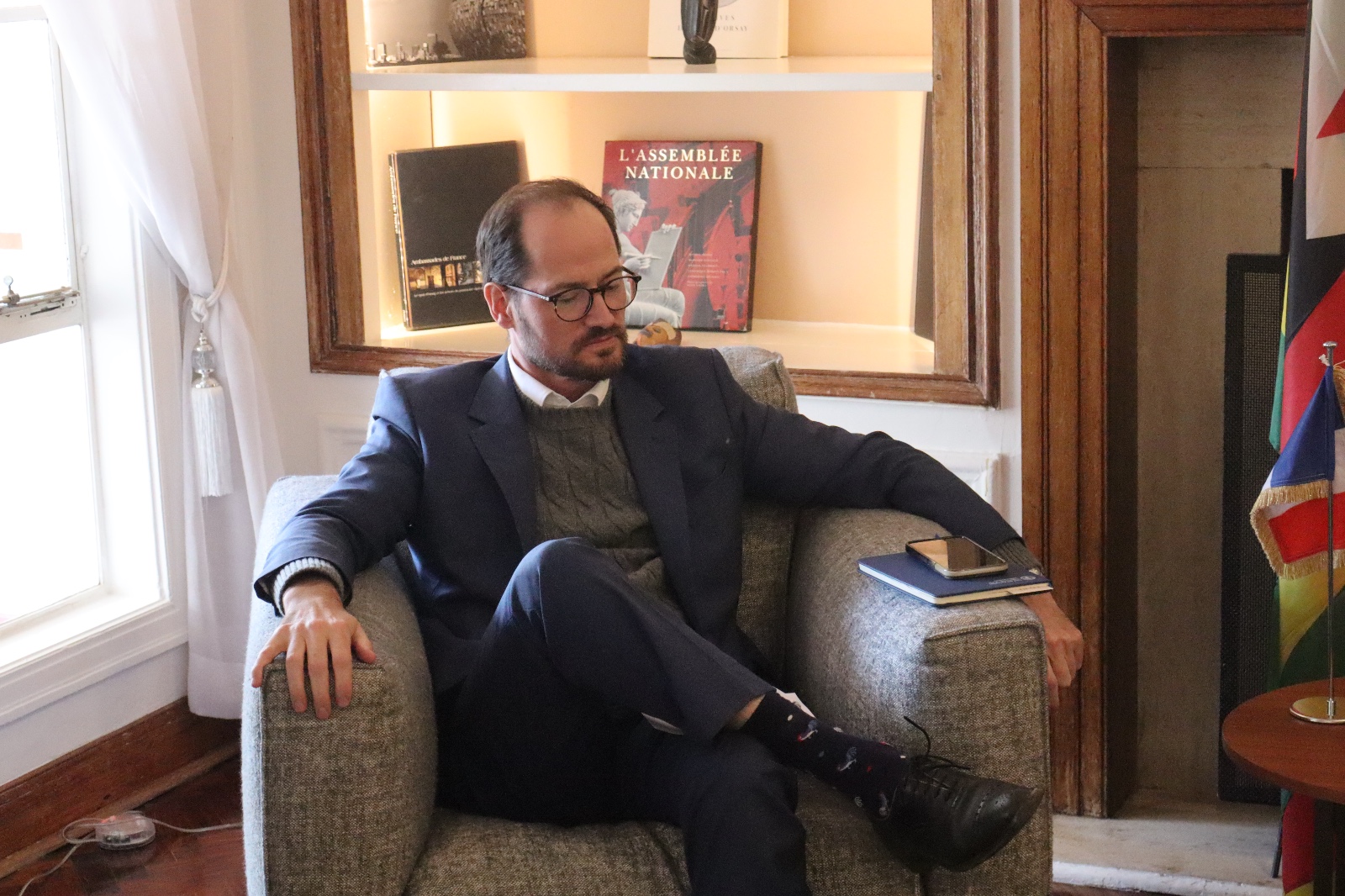
French Ambassador to Zimbabwe, Paul-Bertrand Barets, said energy and climate transition are at the heart of France’s cooperation with Zimbabwe and Southern Africa.
“As you may know, Lake Kariba is the world’s largest dam by water storage capacity. It is 128 metres high and 579 metres long,” he said.
“So it is a huge dam, both in Africa and globally, and it contributes significantly to the energy transition in Southern Africa.”
Barets said France was among the original partners involved in the dam’s construction and had returned to provide expertise for the rehabilitation works.
“And that was not only about concrete swelling that was jamming the gates and had to be fixed,” he said.
“In a consortium with General Electric, Agence Française de Développement and Freyssinet, France intervened in partnership with the Zambezi River Authority to address these challenges.
“I must say it has been a success, as the works are now nearing completion.”
Access to Energy
Barets said the rehabilitation project would help Zimbabwe reduce its dependence on fossil fuels, in line with global climate commitments under the Paris Agreement.
Data by Insights of the World (IOW Data), shows that Zimbabwe’s electricity production remained dominated by hydropower and coal between 2000 and 2024, with hydropower overtaking coal during most years.
However, most countries are now moving away from coal.
“Concretely, through these rehabilitation works, we are extending the lifespan of what remains the region’s largest hydropower source,” he said.
He added that the project is helping to preserve existing green infrastructure and secure clean energy supplies for both Zimbabwe and Zambia.
The two countries share the Kariba Dam for electricity generation. Zimbabwe has an installed capacity of 1,050 megawatts, while Zambia has 1,080 megawatts.
Reducing Power Cuts
Barets said Freyssinet, a key member of the consortium, replaced the dam’s six emergency spillway gates.
The work involved constructing a 40-metre-high steel cofferdam and pouring 915 cubic metres of concrete with exceptional precision.
To stabilise the dam’s foundations, which were threatened by an 80-metre-deep scour hole downstream, engineers installed 48 heavy-duty permanent anchors ranging from 35 to 50 metres in length.
“But in the future, more French companies would be very interested in participating in the construction and rehabilitation of other dams,” Barets said.
“That is something our companies are ready to consider, provided there is the necessary support and enabling environment from the Zimbabwean authorities.”
France already has a presence in Zimbabwe’s energy sector through companies such as TotalEnergies.
“I would also like to highlight that, through these rehabilitation works, French companies have helped develop local expertise and create local jobs,” he said.
“For example, laboratory equipment has been donated, and agreements have been reached with local universities to enable students to work in laboratories used during the project.”
Debt Resolution Key to Investment
While further investment opportunities exist, Barets said Zimbabwe’s ability to attract more foreign capital depends largely on resolving its debt challenges.
“We already have TotalEnergies in Zimbabwe and would be very happy to consider additional investments, provided the Zimbabwean government offers the security and guarantees required for major infrastructure projects,” he said.
“In this regard, we are encouraged by the ongoing negotiations with the IMF and the prospects for future debt restructuring.”
He said international financial institutions and development agencies play an important role in mobilising co-financing for infrastructure projects through various credit facilities.