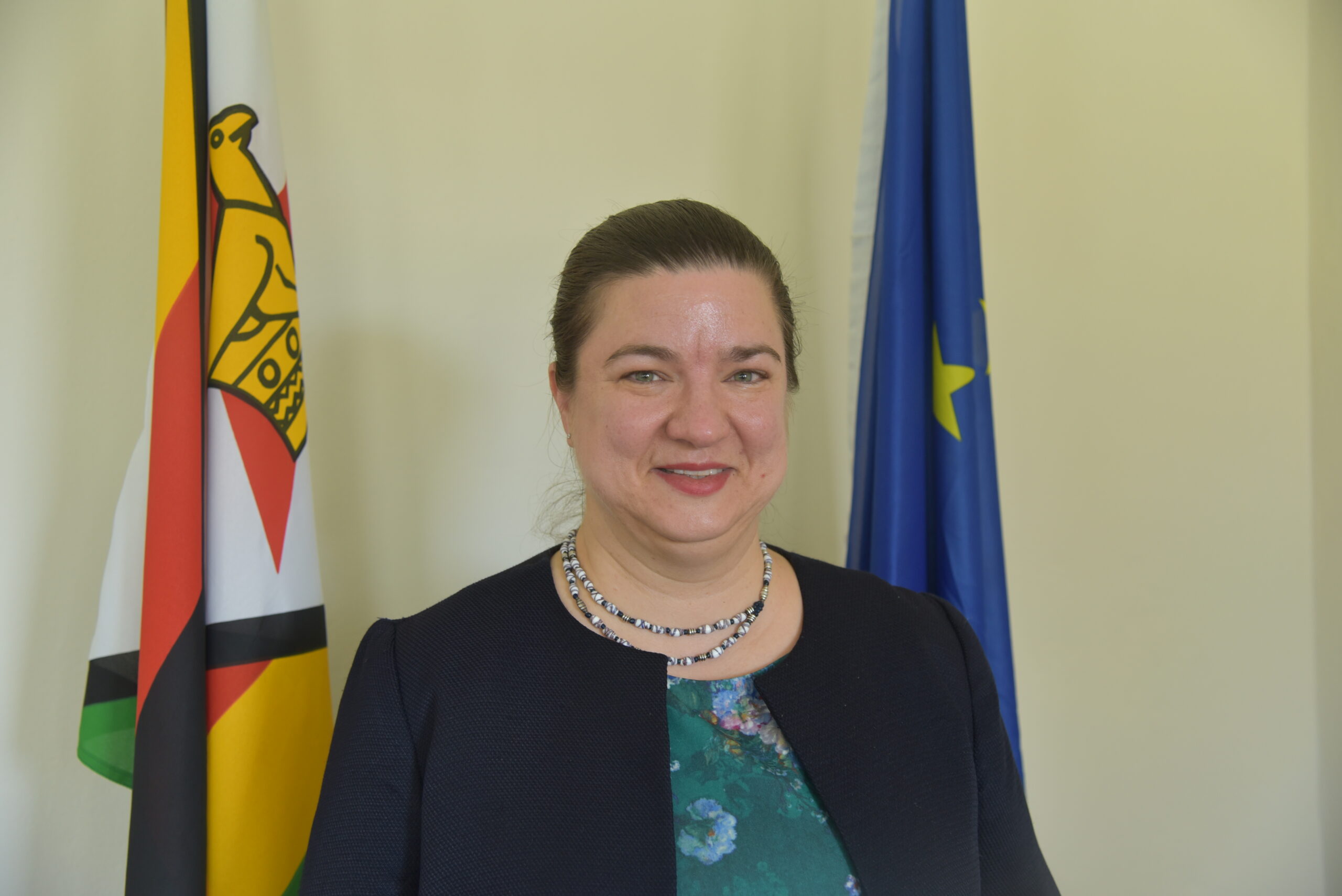
BY NATHAN GUMA
NEW European Union Ambassador to Zimbabwe, Katrin Hagemann, has identified trade and investment as key pillars of the EU–Zimbabwe partnership, signalling a fresh push to expand economic ties and tap into what she sees as Zimbabwe’s largely underutilised export potential.
The move comes as the EU Council recently concluded its annual review, lifting all remaining restrictive measures on Zimbabwean individuals and entities, a move that Hagemann says signals a ‘trust-based, forward-looking partnership.
Over the past years, the EU has grown to become one of Zimbabwe’s largest trading partners.
According to Eurostat, total trade between Zimbabwe and the EU reached US$919 million in 2024, a 10% increase from US$881 million recorded in 2023.
The figure places the EU as Zimbabwe’s fourth-largest trading partner, after South Africa, the United Arab Emirates and China.
EU-Zimbabwe Trade
Zimbabwe maintains a favourable trade balance, with the value of its exports to the EU consistently exceeding its imports from the bloc.
“Zimbabwe benefits from duty-free and quota-free access to all 27 EU Member State markets,” she said during her inaugural Meet the Press round-table meeting held at her residence in Harare.
“However, with only around 200 Zimbabwean companies currently exporting to Europe, significant untapped potential remains. Increasing trade volumes, with the immediate symbolic goal of reaching US$1 billion, represents an important milestone.”
She said that promoting sustainable and inclusive private-sector development is therefore a priority, underpinned by stability, predictability, and strong governance to foster investor confidence.
Since May 2012, Zimbabwean companies have been able to export freely to the EU, provided they meet EU internal market standards.
These include health, safety, and sanitary/phytosanitary requirements, as well as voluntary, market-driven standards such as Global G.A.P., and adherence to Environmental, Social and Governance (ESG) standards.
The EU is the largest buyer of Zimbabwean horticultural products, such as blueberries, oranges, mange-tout peas and sugar snap peas, purchasing over 40% of exports.
Zimbabwe’s main exports to the EU are agricultural products, mainly horticulture, but also tobacco and other products.
The country also exports manufactured goods such as iron, steel and other semi-manufactured products, as well as mining products such as diamonds and gold.
All these have been benefiting from duty-free, quota-free access to the EU market under the Economic Partnership Agreement.
Likewise, the EU can export a wide range of goods to Zimbabwe without duties, except for about 13% of tariff lines that are excluded for strategic and revenue purposes.
These include products of animal origin, cereals, beverages, paper, plastics and rubber, textiles and clothing, footwear, glass and ceramics, consumer electronics and vehicles.
Zimbabwe’s main imports from the EU in 2024 were machinery and equipment, chemical products, pharmaceutical products, precision instruments, cereals and vehicles, according to data by Eurostat.
EU exports contribute to enhancing local industry and productivity, particularly in agriculture, transport, and the tea and leather processing sectors.
Business Development and Investment
Zimbabwe and the EU have also been partnering in the areas of business development and investment, recognising the central role of the private sector in driving sustainable growth, job creation and long-term economic resilience.
Under the EU’s Global Gateway initiative, this cooperation places particular emphasis on improving the investment climate and mobilising quality, sustainable investment.
According to the 2023 ZIDA Investment Report, total projected investment rose from US$460 million in 2021 to €870 million in 2023, representing an impressive 90% increase over three years.
The EU and its Member States have also been supporting investors, both European and local, through various financial instruments.
For instance, since 2021, the European Investment Bank (EIB), the world’s largest international financial institution, along with PROPARCO (with EU guarantees), has provided over US$100 million in credit lines to Zimbabwean commercial banks.
These are CABS, FCB, NMB and Stanbic.
The funds, which are on-lent to small and medium-sized enterprises (SMEs), have been offering loans with longer tenures of up to seven years, lower interest rates and grace periods, thereby stimulating private investment, job creation and economic resilience, with a focus on horticulture and renewable energy.
Areas of Mutual Interest
Ambassador Hagemann described the EU as a reliable partner to Zimbabwe, reaffirming her commitment to a trust-based, forward-looking partnership across various areas of mutual interest.
This includes projects on agriculture, biodiversity, resilience, energy, gender equality and women empowerment, good governance and youth.
She said following the EU Council’s annual review of restrictive measures, all sanctions against individuals and entities have been lifted, though the arms embargo remains in place.
This decision, she said, reiterates the EU’s commitment to constructive engagement and the continued deepening of EU-Zimbabwe relations.