BY DELIGHT GUMA
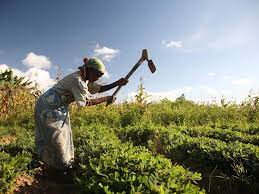
CLIMATE change is continuing to disrupt traditional farming practices, slashing crop yields and threatening livelihoods, but smallholder farmers say uniting farmers, policymakers, and civil society to address these challenges is key, though the road is steep.
The country has been experiencing a shift in seasons, which has seen the unpredictability of rain during farming seasons, thereby reducing yields.
For instance, last year, while sporadic rains were experienced in parts of the country, areas like Mutoko, largely dominated by smallholder farmers, saw little to no rainfall towards the end of the year, affecting yields.
The Zimbabwe Smallholder and Organic Farmers Forum (Zimsoff) says that while damage continues to be done, community climate action trusts have a huge responsibility to help policymakers prioritise climate action.
“I think that one helps that there will be cohesion, because the government will be doing something on their own and civil society organisations will be doing things on their own, so this project will give some consensus whereby people sit and find solutions on how they can solve climate issues in the district,” said Ngoni Chikowe, a Zimsoff technical officer based in Mutoko during the launch of the organisation’s scorecard on climate change.
“At district level, we have a challenge, mostly if you don’t push youths to projects, it’s really quite a challenge because youths are nomadic, so their inclusion in projects is really quite a problem, but for women, we do have women coming through for different projects at district level.”
Chikowe said they are also prioritising indigenous knowledge systems to promote climate resilience.
“The traditional signs are something that has been long forgotten, I think in this project it is something we want to work hard on, so that we could get relevant information on how people used to communicate with nature in terms of forecasting, and it’s quite a lot, some of this information usually gets lost, we encourage sharing information on how people used to forecast,” he said.
“I think it is really quite interesting for us to have a big space for inclusion of these traditional remedies or solutions on how people used to communicate on these traditional aspects.”
As previously reported by The NewsHawks, several farmers in Mutoko have been failing to get access to weather data, making it difficult to predict erratic rainfall patterns, which has worsened climate change.
Local leader, Chief Mutoko, said that not only is climate change disrupting food systems, but it has brought back old diseases, such as scabies.
“The way the rain falls now is very different from how it used to long ago. Nowadays, there are climate change specialists who predict weather conditions, sometimes accurately, but often they don’t, which creates problems for us. For example, they might warn of low rainfall, but that same season ends up with very heavy rains instead,” he said.
“Another issue is that people are using too many gases, especially from cars, which release harmful emissions that damage the ozone layer.
“Right now, I’ve noticed an outbreak of disease in Mhezi, likely because of climate change. It’s mostly affecting children; when you see them, your heart will ache. I’m observing this especially in young children, though a few adults are also suffering.”
Irene Kunaka, an extension officer for Ward 4 in Mutoko District, says the climate crisis is becoming more urgent, hence the need for more innovations.
“While farmers are trying to adapt, the changes are happening too fast, and many new farming innovations are too complex for us to learn quickly. This has led to declining harvests,” she says.
“Another challenge is that most farmers in our area are not experienced in growing small grains, even though these crops are better suited to our region’s low rainfall. We also struggle with adopting useful techniques like mulching, which could greatly improve yields.
“To make matters worse, rainfall patterns have become unpredictable; the rains often stop right when our crops reach the critical reproductive stage, damaging their growth. For weather predictions, we use both traditional methods and modern forecasts, but the traditional ones are often more reliable. Sometimes, modern forecasts promise rain that never comes.”