By Staff Reporter
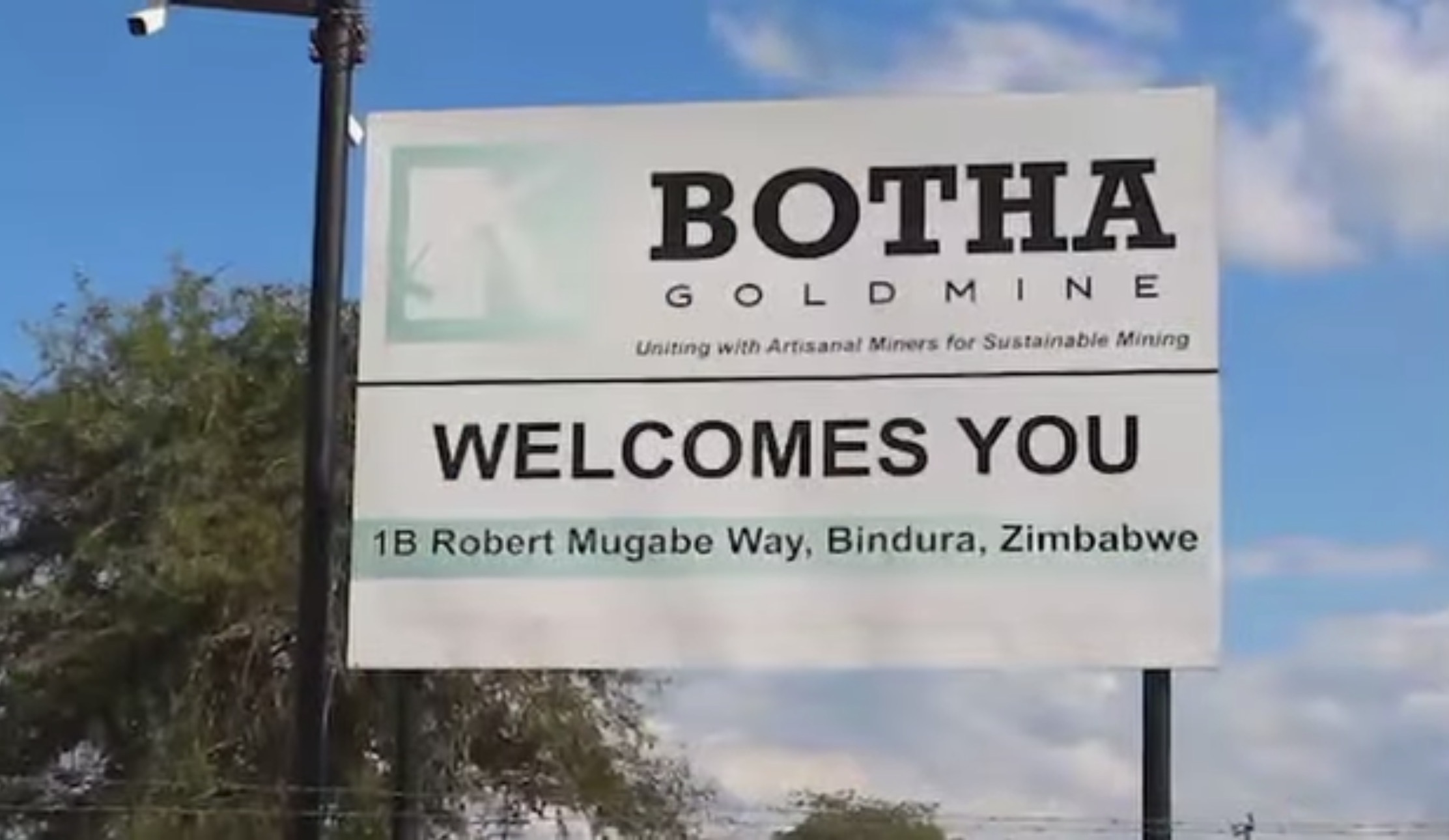
A bombshell court application by a disgruntled Botha Mine shareholder has reignited the battle over the gold-rich claims in Bindura, exposing allegations of a US$3 million revenue siphon and raising fresh questions about how a mining project initially pursued for the empowerment of women and youths ended up at the centre of a bitter corporate ownership dispute.
The explosive revelations have put Botha 1, 2, 3 and 4 under renewed scrutiny, challenging Bindura’s women and youths to revive their fight for a project they say was wrested from their hands.
At the centre of the storm is Side Electrical (Private) Limited, trading as Botha Mine, where shareholder Tendai Chinyani has dragged former executive chairman Temba Kingsley Hlongwani and other company officials to the High Court, accusing them of conduct that allegedly prejudiced shareholders and diverted millions of dollars in gold revenue.
But beyond the boardroom warfare, the founding affidavit reveals exactly how the community project was diluted in the name of seeking investment.
“In about 2015 Botha Mine, for lack of investment, was not operating at the level required to sustain the livelihoods of the shareholders and of the community that depended on it. I and other shareholders accordingly approached the 2nd Respondent for financial assistance. He undertook to provide the financial assistance and capital injection required to make the mine productive and profitable, and to bring further investors to the mine,” Chinyani states in his affidavit.
However, what followed was a massive shift in shareholding. According to the court papers, in exchange for the promised investment, shares were heavily diluted in favour of entities associated with Hlongwani—namely Jiwe Gold (Private) Limited and Sendoyi Trust. The schedule of allotments records that Hlongwani’s entities were allotted a combined 1,110 of the 2,000 issued shares, representing a controlling 55.5 per cent stake.
It is not clear how the current Botha shareholders then acquired the shareholding from the community project, and questions surrounding issues of capital gains tax on the sale of these shares have not been made clear in the court application.
Documents previously seen by this publication show that Kitsiyatota was initially registered as mining claim number 41158BM, covering 31 hectares, following a plea by women and youths seeking access to mining opportunities. The claim was subsequently converted into four gold blocks placed under Side Electrical, whose shareholding and management are now at the centre of a fierce legal battle.
US$3 Million Gold Revenue Allegedly Diverted
In his founding affidavit, Chinyani alleges that more than US$3 million was taken from gold-processing activities at Botha Mine through a disputed agreement with Ouro Tanque (Private) Limited, a company he claims is controlled by Hlongwani.
The agreement, signed in April 2022, reportedly provided for Ouro Tanque to receive 30 percent of profits after processing costs.
However, Chinyani alleges that the arrangement being implemented was materially different, with Ouro Tanque allegedly taking approximately 33 percent of total revenue every time gold was processed, without deducting expenses.
“Since the Ouro Tanque contract was concluded, the 1st and 2nd Respondents have taken more than US$3,000,000.00 (three million United States dollars) from the processing of gold at Botha Mine in this way,” the affidavit states.
The shareholder further alleges that the 25-year agreement was concluded without board authorisation or shareholder knowledge, and that Hlongwani failed to disclose his alleged interest in Ouro Tanque.
Chinyani is seeking cancellation of the agreement, an order stopping its further implementation and protection of the mine’s gold-processing infrastructure.
He also alleges that Hlongwani continued controlling operations and finances despite a December 11, 2024 High Court order which he says confirmed Hlongwani’s removal as executive chairman and director.
The application further accuses Hlongwani of paying himself US$45,000 monthly without board or shareholder approval, while the company was allegedly struggling to meet its liabilities.
Manyau, meanwhile, is accused of having a conflict of interest after allegedly becoming an Ouro Tanque director in November 2025 while serving as Botha Mine’s board chairman.
Women and Youths Vowed Not to Surrender
The community’s fight over Botha Mine predates the latest court application.
In June this year, Bindura women and youths turned the funeral of liberation heroine Cde Concillia Gonzo into a rallying point for their struggle to regain control of the mining claims.
Gonzo had championed their cause until her death, with women miners describing her as a cornerstone of their campaign against exclusion.
“She fought until her last breath. Now the fight passes to us. We will not abandon what she died defending,” the women said.
Youths attending the funeral also vowed to resist their exclusion from the gold-rich claims, insisting that the project should benefit the community.
The shareholder’s latest disclosures have now placed the dispute back in the spotlight, raising the prospect of renewed demands for transparency over the claims’ ownership, management and financial dealings.
However, the court application is a shareholder dispute and does not, by itself, establish that the community legally owns the claims. That question requires clarity from the relevant mining and company records.
ZEYUMESA Had Already Raised the Alarm
The controversy surrounding Botha Mine had already attracted the attention of the Zimbabwe Empowered Youths United in Major Economic Sectors Acceleration (ZEYUMESA).
In a February 27, 2025 letter to the Provincial Mining Director and the Permanent Secretary in the Ministry of Mines and Mining Development, ZEYUMESA chairperson Tariro Chidavaenzi sought urgent demarcation of Side Electrical Botha 1, 2, 3 and 4.
The letter distanced the organisation from alleged financial dealings involving Hlongwani and raised concerns about miners reportedly being charged US$20,000 to operate within Freda Rebecca Mine’s Lease 21 without the leaseholder’s permission.
ZEYUMESA warned that it did not want to be held responsible for disputes arising from money allegedly collected from miners and also disclosed a pending application for condonation and rescission of a consent order under case number HCH587/25.
The correspondence underscores that concerns over mining boundaries, financial dealings and potential legal liabilities existed well before the latest corporate fallout.
Hlongwani Exit Adds to the Drama
In a development that has intensified the crisis, Side Electrical issued a public notice on October 21, 2026, announcing that Hlongwani’s tenure as managing director had ended with effect from October 20, following a shareholders’ meeting.
The company stated that he no longer had authority to represent it, transact business or enter into new commitments in that capacity.
It also assured stakeholders that mining operations and contractual obligations would continue under established management structures.
The announcement came a few days after the filing of the court application by Chinyani, adding another layer to the unfolding corporate battle.
Chinyani wants Hlongwani and Manyau removed from their positions and is seeking enforcement of the earlier High Court order, alongside measures to protect the mine’s processing equipment from removal or encumbrance.
Will Bindura Rise to the Occasion?
The latest revelations place Bindura’s women and youths at a critical crossroads.
For the women and youths who stood with Gonzo, the challenge is to turn their longstanding grievances into a coordinated, evidence-based demand for accountability through lawful channels.
Ends//