News
A Tale Of Two Executives Close To Mnangagwa
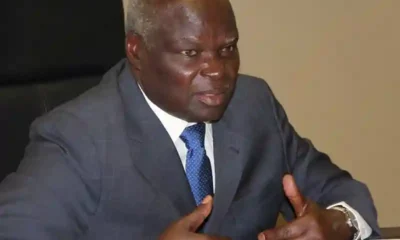
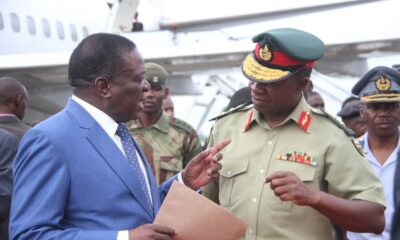
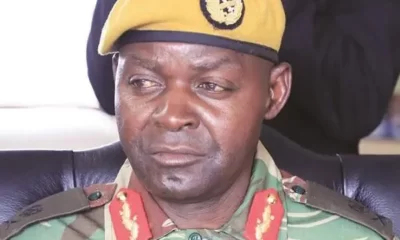
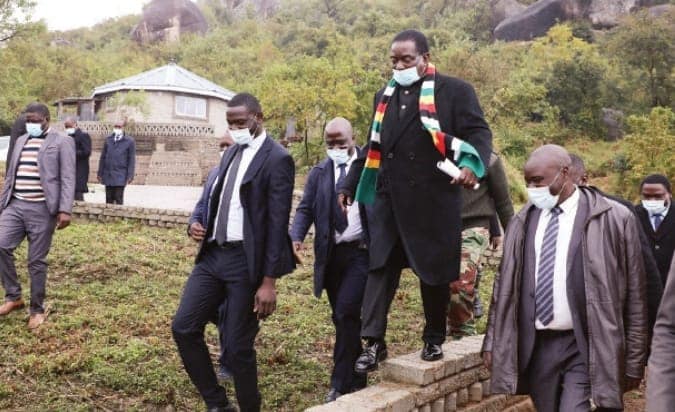
When Zesa executive chairman Sydney Gata , a highly-rated engineer who had controversial reign at the state power utility, died recently, President Emmerson Mnangagwa wasted no time to visit the family and quickly declare him a national hero, an honour which is difficult to justify on the basis of his record and on merit.

Why Did Mnangagwa Abandon Munatsi?
When Zesa executive chairman Sydney Gata , a highly-rated engineer who had controversial reign at the state power utility, died recently, President Emmerson Mnangagwa wasted no time to visit the family and quickly declare him a national hero, an honour which is difficult to justify on the basis of his record and on merit.


Zanu PF rarely declares people heroes, especially outsiders.
It has denied hero status to some of its liberation struggle stalwarts who can’t be compared to Gata.
Gata was a good engineer and achieved a lot in other areas of his career, but his management record at Zesa and national contribution was not that great at all.
It was not exceptional, worthy of heroism; fulfilling a high purpose or attaining a noble end. With vast knowledge in his area of study and interest , Gata left a lasting legacy in Zimbabwe’s energy sector, running Zesa during challenging times and introducing strategic reforms to save it from becoming a failed state enterprise.
He had a good career spanning decades, with some critical roles in academia, government, and international organisations like the World Energy Council.
However, there was nothing heroic about it. It was just good work in some respects. His tenure at Zesa was not rosy – it was associated with electricity shortages, debt, nepotism, corruption and mismanagement, although he always denied that to media. Zesa is considered technically insolvent, meaning its liabilities exceed its assets, and thus it is unable to meet its financial obligations as they come due.
In simpler terms, Zesa owes more money than it has, making it difficult to pay its debts and operate effectively. That hardly makes the substance of heroism.
In fact, there is nothing heroic about that. So why did Mnangagwa declare Gata a national hero? The answer is a public secret.
Gata’s controversial personal life had attracted a lot of public attention due to his patronage relationships and family connections.
He was connected to the late former president Robert Mugabe and Mnangagwa by marriage. Gata was married to Ntombana Regina Gata, Mugabe’s half sister from his father Gabriel Matibili’s marriage to MaTshuma from Bulawayo after he had abandon his mother Mbuya Bona in Zvimba. The marriage between Gata and Ntombana ended in divorce in January 2022.
After that Gata lost his job in 2006 after the position of executive chair was abolished, only to return when Mnangagwa took over, demonstrating the power of patronage.
Most importantly, Gata’s widow Angeline Mayahle, Deputy Minister of Primary and Secondary Education, is a sister to Moline Mayahle, who reportedly has children with Mnangagwa, a public secret.
So the familial relationships and the patronage between Gata and Mugabe, and Gata and Mnangagwa ran deep.
Mnangagwa brought Gata back to Zesa, having served from 2001 to 2006 and then later from 2019 until June 30, 2025.
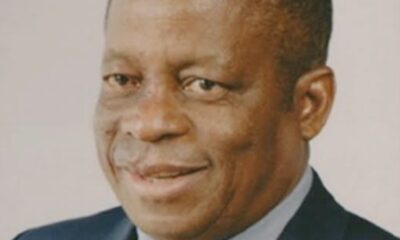
THE DOUGLAS MUNATSI MYSTERY What is not known, however, is why Mnangagwa abandon one of his closest business allies, banker Douglas Munatsi (left) after his tragic death in November 2021.
Munatsi had done well in his banking career and was a top executive, just like Gata. He was a founding partner of DBF Capital Partners and previously Group CEO of ABC Holdings, the parent company of BancABC.
He had founded Heritage in 1995.
He later successfully negotiated Heritage’s merger with First Merchant Bank Limited, then controlled by Anglo American Corporation.
Prior to setting up Heritage, he was an executive with the International Finance Corporation, the private sector arm of the World Bank.
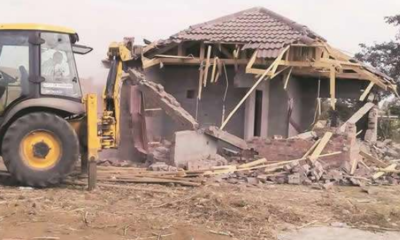
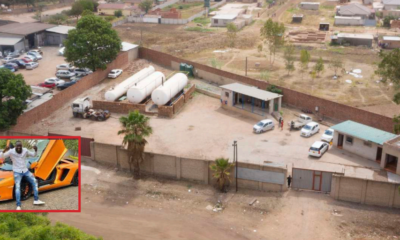
Munatsi had built significant wealth and owned a number of properties in and outside of the country.
These include two massive residential properties in Borrowdale, which he was renting out, while he alternated staying between his penthouse and his Kunatsa Farm in Matepatepa, Mashonaland Central province, and also Johannesburg, South Africa.
He also owned a mansion in Sandton, South Africa, and another penthouse in Florida, United States. Munatsi had other assets.
Munatsi, Zimbabwe Investment Development Agency CEO at the time, was found burnt to death in a mysterious fire at his upmarket Northfields penthouse in Harare, close to State House.
His charred remains and signs on the scene pointed to foul play or a military-style hatchet job – a hit – done on him, more like what had happened to the late retired army commander General Solomon Mujuru at his Beatrice farm in 2011 on that fateful night on 15 August.
Investigative journalists painted a vivid picture of “murder most foul”, clearly showing Mujuru was almost certainly murdered, just like Munatsi, by unknown assailants.
Munatsi had serious disputes at Zida with some top powerful figures, often spilling into State House, but always thought no one would touch him, saying, “I go to the gym, I’m not afraid of them”.
In fact, he even thought he was invincible, threatening to fight corrupt crime syndicates and criminals around the President alone “with my bare hands” – saying “ndiriboyz yekuFiyo”.
Looking tough and fit from his gym routines, Munatsi postured as a deadly barehanded fighter.
A close Central Intelligence Organisation (CIO) friend of his warned him in the presence of a reliable source over a drink at his Greendale property (at the gazebo one evening) in 2020:
“If you challenge these guys, they will take you out, they will kill you – i know this system very well; it’s brutal be very careful, to which he replied, ‘my friend i go to the gym, I’m not afraid of them’.
” The seasoned CIO guy, who worked very closely around Mnangagwa, having worked with the late former president Robert Mugabe for years, just sniggered and said: “System inokupedza Doug, regakuita zvemafunnies.”
The CIO guy also ominously warned Munatsi not to interfere in powerful people’s private lives, which is the smoking gun that failed to surface in the end. After his mysterious death, Mnangagwa said Munatsi’s death “in unclear circumstances came to me as a great shock”.
He also said police were busy investigating the issue to get to the bottom of the matter. He then offered a state-assisted funeral for Munatsi.
However, after that Mnangagwa neither visited Munatsi’s family nor attended his funeral. All those who knew Mnangagwa and Munatsi’s close relations were deeply shocked.
They asked, why?
Why did Mnangagwa suddenly change his mind?
What did the intelligence services tell him?
What had Munatsi done?
What happened to the police investigation?
Most importantly, what really happened to Munatsi?
The way Mnangagwa treated Gata and Munatsi – two top executives he was very close to – after their deaths raises more questions, a mystery which may never be fully unravelled, than answers.