News
ZANU PF’s Succession Politics, Is Not a Contest of Ideas but a Struggle for Access
Prominent Zimbabwean scholars have long argued that ZANU PF endures in part because it is bound by liberation history.

ZANU PF’s Succession Politics, Dear Reader, Is Not a Contest of Ideas but a Struggle for Access
By Phillan Zamchiya
Dear Reader, in the village, when dusk falls, even the beaten animal limps back to the kraal that hurt it.
At times, even human beings mistake pain for home because the chains feel familiar. In Zimbabwe’s ruling party, ZANU PF, this rings painfully true.
For six decades, the party has been characterised by storms of assassinations, factional fights and purges, coups, and betrayals.
Yet, strangely, very few ever leave it by choice.
Those who are pushed out often circle back, seeking re-entry, contrition, or forgiveness.
Even some who once bore the scars of opposition politics fighting for democracy have now boarded the gravy train.
To make sense of Zimbabwe today, where politics can break bones and end careers, and where fierce succession battles are taking shape, one must understand three silences: the silence of exit, the silence of voice, and the silence of ideology.
This is important as Emmerson Mnangagwa’s self-appointed cabinet and compliant parliament are making frantic unholy efforts to extend his stay beyond the constitutional 2028 end date toward 2030.
In this context, why does loyalty bend not to ideas and the constitution, but to leaders and factions? Why is voice, open dissent, so faint, barely audible?
And why do so many choose not to exit an increasingly authoritarian ruling party?
In healthier democracies, political parties survive or die by their ideas.
Prominent Zimbabwean scholars have long argued that ZANU PF endures in part because it is bound by liberation history.
However, what drives its succession battles today is not ideological loyalty; it is leader–follower loyalty.
The politics of the stomach, not the constitution, prevail.
Succession has become a political auction in which positions rise and fall with the shifting winds of factional power.
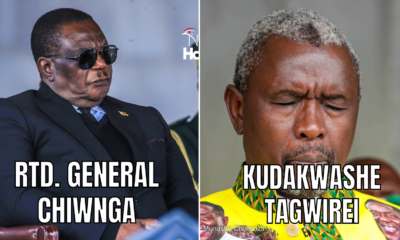
Nothing reveals this better, Dear Reader, than the rise of Kudakwashe Tagwirei, a business tycoon whose controversially acquired wealth has become its own political faction.
His money bags intend to buy influence, loyalty, and silence.
It does not augur well when there is a kind of private treasury underwriting public power.
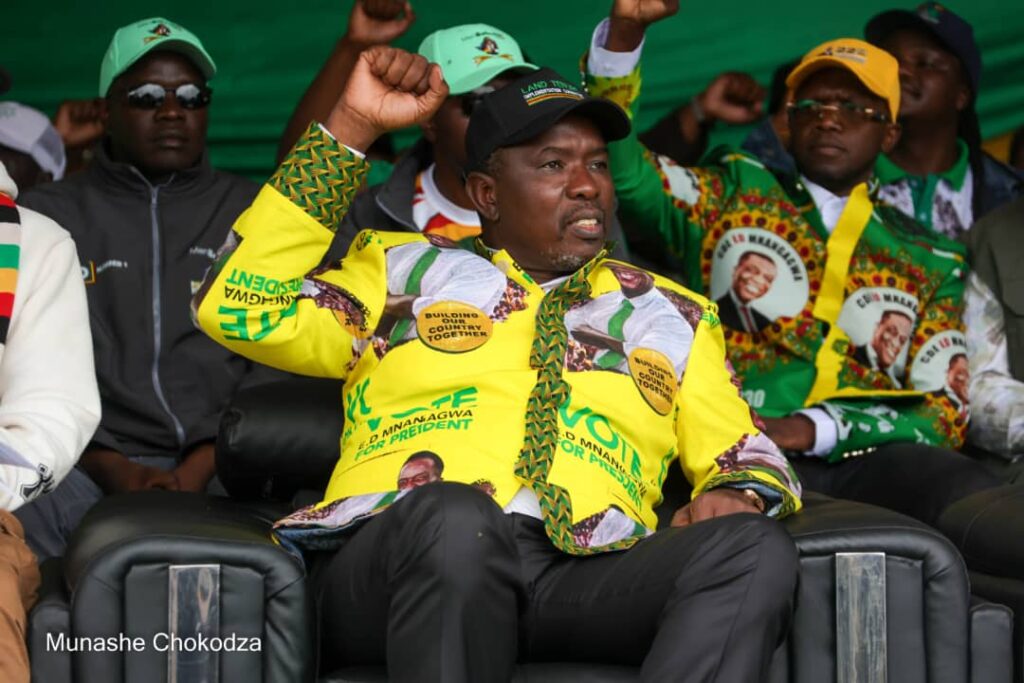
Tagwirei is whispered about as a potential ‘kingmaker’ and even a successor, not because he has ideology or a national vision, but because he controls the fuel lines, the government tenders and the cashflows that feed the ruling elite.
In this system, loyalty becomes transactional rather than principled, as members pledge allegiance to Mnangagwa, to Constantino Chiwenga, to the Tagwireis, and to the shifting cast of ‘kingmakers’ who orbit around them.
These are not permanent factions but temporary shelters in a storm.
They signify plastic alliances that form and dissolve according to who holds proximity to the presidency.
In such a world loyalty becomes a currency, not a virtue.
This explains why the party, though old and long-ruling, behaves like a house held together by ropes rather than bricks.
Every succession cycle, from Ndabaningi Sithole’s ouster, to Robert Mugabe’s rise in 1977 after the prison coup, to Mnangagwa’s ascent in the 2017 military coup, loosens the knots even further.
Even for ZANU PF members who disagree with the 2030 chicanery, departure from ZANU PF is hardly a choice.
For them, beyond the gate of the party lies a cold, barren landscape: no access to state resources, no contracts, no tenders, no protection, no livelihood.
Hence popular cliché it is cold outside ZANU PF.
People would rather wait to be pushed out, expelled, humiliated, labelled as traitors, arrested, or driven into exile.
Even those cast out still hover at the party’s edges, hoping for rehabilitation, a pardon, or a factional opening.
Returning, even after disgrace, becomes routine.
Tragically, some former die-hard opposition cadres are also limping toward the ruling party, trading long-held principles for proximity.
In such a system, staying, entering, or re-entering is not a sign of faith in 2030; it is a disgraceful act of survival.
If exit is dangerous, voice is even more perilous.
In ZANU PF, disagreement is not treated as substance; it is treated as rebellion. Policy debates barely exist.
What matters are personalities, who is aligned to whom, who controls which structure, who is closer to the centre of power.
Those who dare to speak openly quickly learn the cost. Arrests arrive dressed up as charges of “subversion,” cars and allowances are withdrawn, reputations are dragged through the mud, and livelihoods are choked at the roots.
The message is simple: silence is safer, and dissent is perilous. For many senior leaders in ZANU PF, silence is not consent to 2030; it is self-defence.
At district and village levels, party members whisper what they cannot shout. But whispers do not change institutions, they only create a politics of fear.
I have observed that the generation that once confronted a brutal colonial settler state now confronts the economic fragility of old age.
Their pensions are small, their health uncertain, their influence dependent on networks tied to the ruling party.
The cost of speaking has become too high, the rewards too uncertain.
Thus voice, the heartbeat of democracy, is suffocated long before it can become collective action.
Zimbabwe’s deeper political illness lies in its hyper presidentialism.
This emerges when the president becomes the central, overwhelming locus of political power, beyond what the constitution intended.
Checks and balances are either neutralised or heavily constrained. In this context, succession for the throne becomes an all-or-nothing battle.
Losing power is not merely losing an election, it is losing security, livelihood, and protection.
Power is construed as the only insurance policy. And because the presidency is the single centre of gravity, every faction fights as though defeat equals annihilation.
Zimbabwe today is suspended in an intense contest between those who guard state power and those who seek it.
The November 2017 coup did not resolve succession; it merely shifted the battlefield.
The next transition, whenever it comes, will again test whether Zimbabwe can move beyond the big-man politics entrenched since 1980.
The task ahead is to defend the constitution and build a politics that is no longer a life-and-death struggle.
A new politics is long overdue where institutions matter more than personalities, where succession is a democratic and constitutional process rather than a war, and where loyalty returns to its rightful place: loyalty to country, not to ‘kings’.
Every good human being, from Checheche to Chachacha, has a duty to stand with those who choose the constitution over personalities, ballots over bullets, and freedom over fear or force.
Until then, Dear Reader, as the succession battle unfolds avoid mistaking pain for home just because the chains feel familiar.
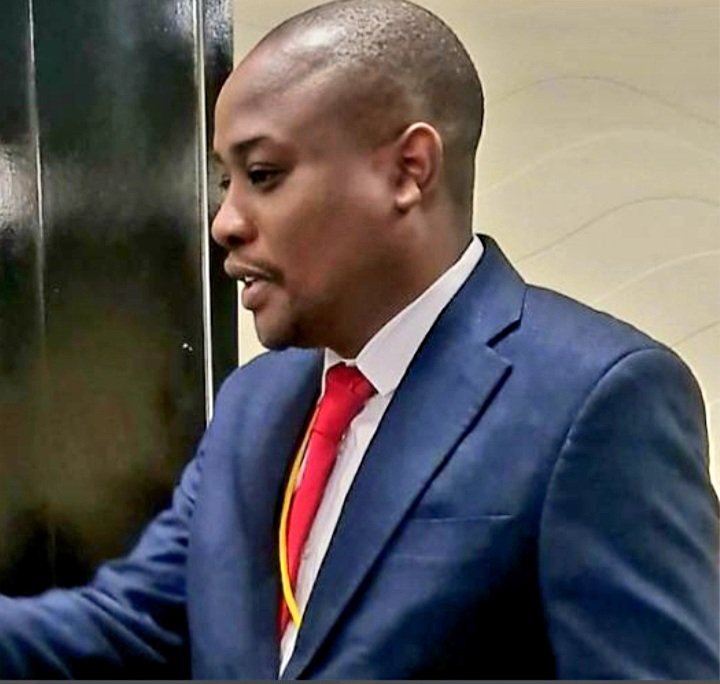
Dr.Phillan Zamchiya I write in my personal capacity.
18-11-2025