BY NATHAN GUMA
IN the light drizzle, people make a short dash from their vehicles to the entrance of the giant Rainbow Towers Hotel in Harare.
Camera people jostle up and down, following visitors as some of them catwalk towards the registration tent, just outside the towering hotel.
“Today you are important people,” says Henry Moyo, a consultant with Viago, an international travel group. “We have brought you camera people that are going to film you from your cars all the way to the hotel. There is more!”
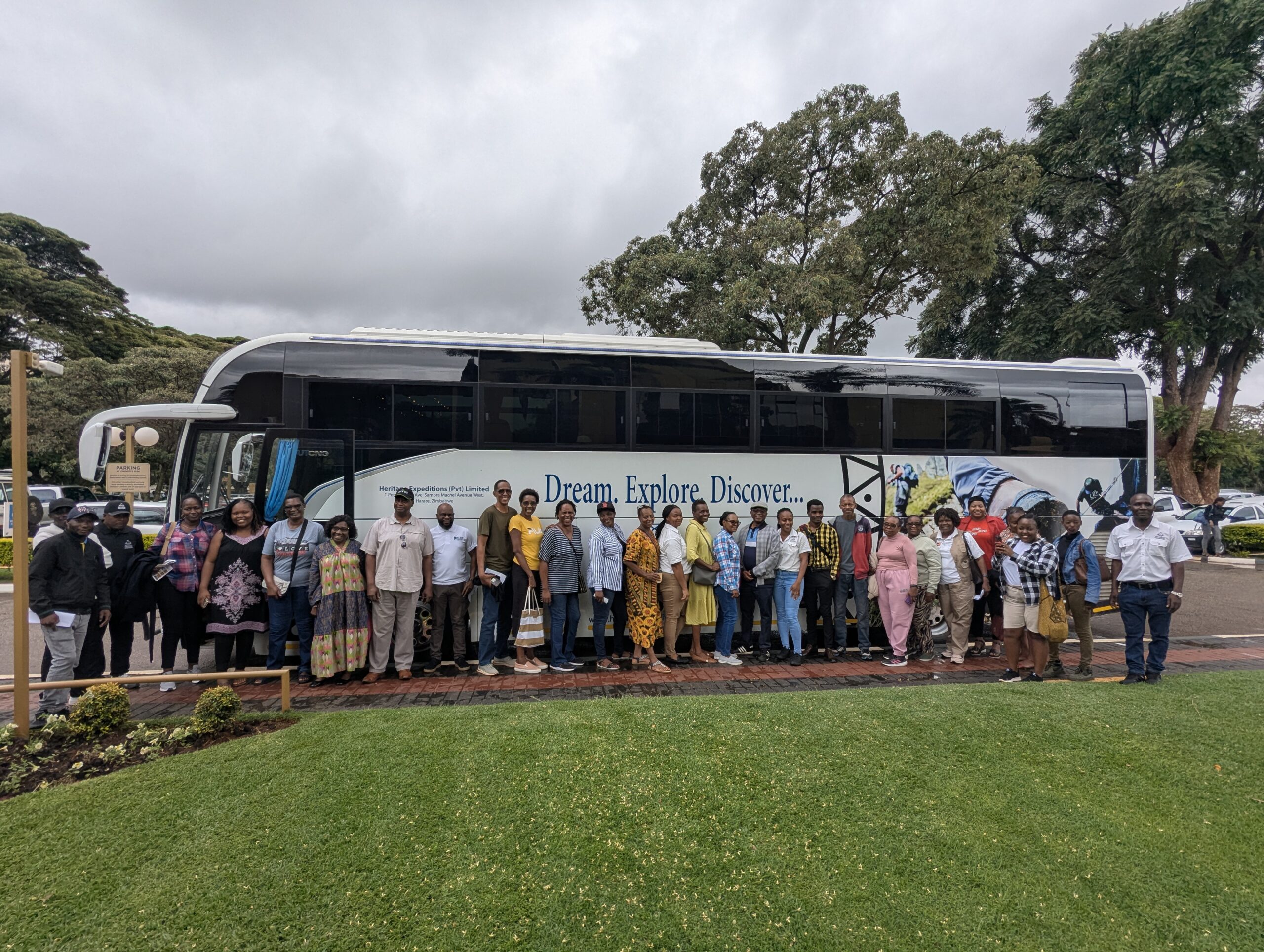
Everyone present is happy to have been invited to be part of Harare’s inaugural tour bus, which showcases the city in all dimensions.
The tour bus is part of an initiative by Club Viago and Rainbow Tourism Group subsidiary, Heritage Expeditions Africa, to promote local tourism and attract foreign visitors.
It also comes at a time when the Ministry of Tourism and the Zimbabwe Tourism Authority (ZTA) have been promoting the Zimbhoo initiative, which celebrates the country’s rich and diverse tourism offerings while embracing its beauty.
Data shows that Zimbabwe’s tourism sector has already posted a strong comeback after the ravages of the Covid-19 period.
Viago and RTG hope to build on that, further improving local tourism.
Outside the hotel is an air-conditioned coach and a police escort for the convenience of all visitors preparing to be blown away by some of the iconic relics within the city, most of which they had never heard of.
After boarding, and as the bus moves, the main tour guide, Arthur Mukandiwa from the National Archives and Museums of Zimbabwe, is up to the task, giving an insightful but brief background of each area covered – from Harare’s old suburb of Mbare to the upmarket Sam Levy Village in Borrowdale.
“Chief Mbari lived at the summit of the hill,” he says, giving a short, interlinking history of Mbare and how the capital city Harare got its name.
“He lived at the summit of the hill. Whenever some chiefs like Chief Nehara came to raid him, he was always awake. He always lit some logs that kept the fire burning at the summit of the hill.
“So, whenever they came to raid him, they said ‘Haarari’. That’s where the name Harare came from. Harare means he never sleeps.”
The coach also goes past some unfinished but promising work close to Mbare, where a new market is being built right next to Ardbennie Road.
This is being set up after the main market was razed by fire in October last year.
In the CBD, Mukandiwa gives a brief background to all the major buildings, and some of the oldest, which have been preserved to this day.
Some of the oldest buildings include Meikles Building, built in 1892, Arnold Building, built in 1910 along Robert Mugabe Road (formerly Manica Road), Union Buildings (1910), Old Yorkshire House (1911), Standard Bank Building (1911), and Fereday and Sons (1923).
“This is not only an exciting city tour on a luxury bus. But this is even more educational than I anticipated. I now have something to tell my children whenever I come into the city next time,” says Chipo Sande, who was also part of the tour.
In the pouring rain, the bus passes through Sam Levy Village, where people dash out to buy some food before heading back to the hotel.
“I really wish we could do the same trip over in future, but for other areas. I have just learnt that there is a lot to explore in Zimbabwe. Perhaps if we can do this for other urban areas or even rural ones, this could be something of interest and very exciting while being so educative as we have seen today,” says another passenger who was part of the trip.
Club Viago said the tour is one of the initiatives they are going to use to promote local tourism.
“The idea behind this is to show that people can enjoy their own local environment and tourist attractions; learn about your own history, heritage sites, culture and other things, for instance, simple stuff like what is the difference between streets and avenues in Harare,” Moyo says.
“Avenues are lined up with trees, while streets have got only buildings. The trees form avenues. Simple things like that appear like trivia but are informative and educational.
“We are using hospitality to link and interconnect with other sectors to reap the tourism dividend.”
He says there are several other enthusiastic investors who want to take the concept and experience to Masvingo and other cities.