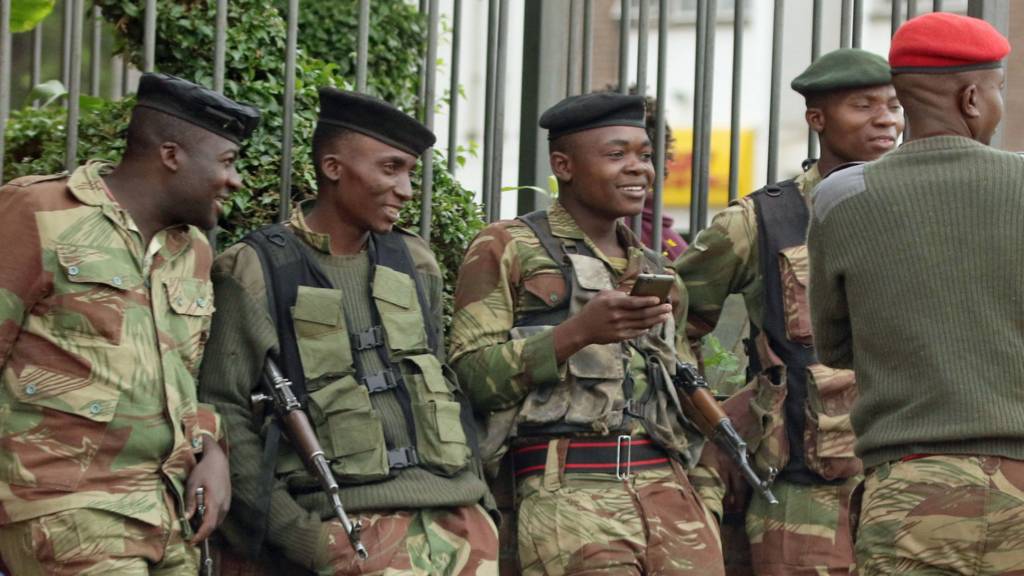
A group of army commanders who helped President Emmerson Mnangagwa to seize power from the late former president Robert Mugabe in November 2017, but were later removed, are closing ranks with the late ex-army commander retired General Solomon Mujuru’s loyalists to manoeuvre to block the current contentious constitutional amendments being publicly debated.
Parliament is holding nationwide public consultations over a 90-day period as required by the constitution to gather people’s inputs.
A former Zimbabwe Defence Forces commander told The NewsHawks:
“What is happening now is that former army commanders who helped President Mnangagwa to come to power in 2017, but were purged later, have found each other with Mujuru’s loyalists to form a coalition to oppose the constitutional amendments.Retired Air Vice-Marshal Henry Muchena is echoing the voice of Mujuru allies who were removed. He is a former Mujuru ally before his death in 2011.Retired Lieutenant-General Winston Sigauke Mapuranga represents those supporting him.Remember Muchena was principal director in the Zanu PF Commissariat Department after retiring from the Air Force in 2010.He was removed by Mnangagwa from his position after he took over.However, there are many other generals who were removed after 2017, mainly Vice-President retired General Constantino Chiwenga’s allies, such as retired Lieutenant-General Anselem Sanyatwe and retired Lieutenant-General Engelbert Rugeje.So there is now a convergence of Mujuru and Chiwenga’s allies to oppose the constitutional changes.”
Mujuru and Chiwenga were rivals.As a result, Mnangagwa is currently navigating a severe internal crisis as he moves to consolidate power and push for a term extension to 2030, while reforming political, electoral and governance systems for legacy purposes, insiders say.
This has sparked backlash from retired military leaders and some senior civil servants.Mnangagwa removed several senior military and security officials who were instrumental in the 2017 coup that removed Mugabe.
These include Sanyatwe who was booted out in March last year amid fears of a looming coup instigated by the late war veterans leader Blessed Geza and supported by a faction of the Zimbabwe National Liberation War Veterans Association.
Many of the removed military leaders are Chiwenga’s backers who led the 2017 coup, but are now considered a serious threat by Mnangagwa’s camp amid his fierce succession battle with his deputy.
Analysts say this is part of Mnangagwa’s coup-proofing strategy.
He is reshuffling them to protect himself against a potential coup.
As a result, a group of retired army generals, led by Muchena, has challenged Mnangagwa’s term extension, writing to the Speaker of Parliament to condemn the constitutional changes described by some as a “constitutional coup”.
Zanu PF is currently divided into two main warring factions: one pushing for the “2030 Agenda” supporting Mnangagwa and the other backing Chiwenga resisting it.
The opposition and civil society are divided, fragmented and weak, leaving Zanu PF to easily push the changes through the legislature where it commands a politically engineered two-thirds majority.
The main battle line is whether these changes should go through a referendum or not.
The opposition says there has to be referendum since the changes amount to removal of term limits.
However, the government and Zanu PF say there is no need for a referendum as they are only changing the “electoral cycle” and not term limits.
The current proposals extending Mnangagwa’s rule, presidential term from five to seven years, and changing the electoral system are viewed as major constitutional changes, making a referendum legally necessary, according to some legal experts.
But government insists a referendum is not necessary as they are only lengthening the electoral cycle to ensure political stability and cure toxicity associated with disputed elections in Zimbabwe.