BY BRENNA MATENDERE
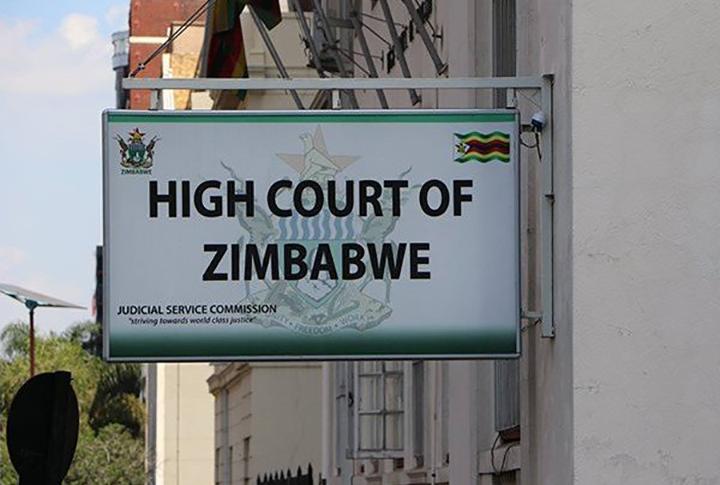
HIGH Court Judge Justice Rodgers Foroma Manyangadze today (5 February) ruled in favour of an application filed by Chitungwiza residents and put forward an order to interdict Prophet Walter Magaya from corruptly conducting unapproved projects in Chitungwiza.
A high court interdict is a court order from the High Court that either prohibits a person from doing something (prohibitory) or compels them to do something (mandatory), typically granted to prevent harm or protect a right.
To obtain an interdict, an applicant must demonstrate a clear or prima facie right, an actual or apprehended injury, a balance of convenience favoring the order, and the absence of any other satisfactory remedy.
In the whole of last year, the matter could not be heard in the High Court which raised suspicion that Magaya could have bribed court officials.
Magaya is leader of one of Zimbabwe’s biggest Pentecostal churches, Prophetic Healing and Deliverance Ministries (PhD).
Last year in June, the Chitungwiza Residents Trust (CHITREST) filed an application seeking to bar Magaya’s company, Wistmer Investments (Pvt) Ltd, from carrying out any of its planned projects without official municipal approval.
Wistmer Investments was pushing to roll out a comprehensive 10-year development plan that purports to turn Chitungwiza into a “smart and green city” under the guise of controversial authorization by central government but without consent from the Chitungwiza municipality.
However after today’s High Court hearing, CHITREST lawyer Innocent Simba Nderere Scalen Legal Practitioners confirmed that Magaya’s company had been stopped in its track.
“The interdict has been granted. Magaya and the company have been interdicted from initiating any development whatsoever within Chitungwiza without approval and following due processes as required at law.
“So effectively the company cannot do anything unlawful or without following due processes,” he said.
On Monday 13 January, lawyers representing CHITREST led by Nderere wrote to the High Court Registra Joseph Mundondo complaining and seeking a hearing date.
“We refer to the above matter in which we represent the Applicants and would like to express our professional interests. We filed our notice of set down on the 22nd of August 2024. Following this, on the 5th of December 2024, we were required to consolidate the record for the hearing which we completed on the same day.
“We kindly request your assistance in scheduling the matter for a hearing at your earliest convenience. Thank you for your attention to this matter. We appreciate your cooperation,” read part of the letter.
Mundondo then buckled under pressure and set done the 5th of February as hearing date for the matter.
In a letter obtained by this publication dated 15 January 2025, addressed to CHITREST lawyers, Mundondo wrote: “Take notice that the above Court Application will be heard and determined by the HIGH COURT OF ZIMBABWE at Harare before Honourable Mr. Justice R.F. ManyangadzeJ on Wednesday, the 5th day of February 2025 at 10:00 or so soon thereafter as counsel may be heard.”
Alice Kuvheya, the CHITREST director, said in an interview that she is happy with the final judgement interdicting Magaya and his company.
“For long we were concerned about delays in the start of the hearing but now that the judgement has since been granted in our favour, it is a great day for us,” she said.
In the application, CHITREST was the first applicant and its director, Kuvheya, the second.
Wistmer Investments was cited as the respondent.
Part of the application read: “This is an application for an interdict or an order to restrain the respondent, as well as any individuals acting on its behalf, from undertaking any projects or development initiatives within Chitungwiza without following the due process and obtaining the necessary approvals from the Chitungwiza municipality.”
CHITREST said, by seeking the order against Wistmer, it was acting in the public interest and in line with Section 85(1) of the constitution that empowers any bona fide person who feels a fundamental right is being infringed to approach the courts for redress.
In addition, CHITREST noted that the Chitungwiza municipality rejected Magaya’s proposal for the master plan last April.
The respondent had committed to fund the entire process of preparing the Chitungwiza master plan, which entails providing resources to a team of technical experts involved in the planned “smart city” project.
All 33 councillors at the municipality rejected the proposal because they felt that the Memorandum of Agreement terms were unfavourable to Chitungwiza.
“I wish to record that, despite the aforementioned circumstances, the respondent persisted in carrying out developments within Chitungwiza without adhering to the necessary procedures or obtaining approval from Chitungwiza Municipality,” states Kuvheya in her affidavit.
She also accused the respondent of setting up an aquifer project in Jonasi Village in Seke earlier, again without council approval. This ruling adds to Magaya’s mounting list of legal troubles.
He is currently embroiled in another corruption scandal in Bulawayo, where he allegedly defrauded congregants in a failed residential stands scheme.
The scheme, launched in 2016, promised to provide 1,000 residential stands at Danglasedale farm on the outskirts of Bulawayo.
Magaya, through his company Planet Africa, sold the plots for US$4,000 each on the promise that he would construct houses for the beneficiaries, including his church members.
The beneficiaries would make monthly mortgage installments based on the property’s value.
Documents obtained by The NewsHawks show that the congregants made payments interchangeably to Planet Africa and the PHD Ministries offices, raising questions about the accountability of the project.
However, to date, the construction of the houses has not progressed as promised.
Recently, Magaya was disqualified from contesting for the presidency of the Zimbabwe Football Association (ZIFA) for failing to avail his Ordinary Level certificate as required.
He went to the High Court to challenge the disqualification but also lost.
The loss opened a can of worms, with UK-based journalist Maynard Manyowa establishing through an investigation that Magaya had falsely claimed that he held a marketing diploma and an honorary doctorate.
Manyowa is the lead producer for Dug Up, a UK start-up that produces documentaries and podcasts.
The Zimbabwe Anti-Corruption Commission (ZACC) recently commenced investigations into the reported fraud.