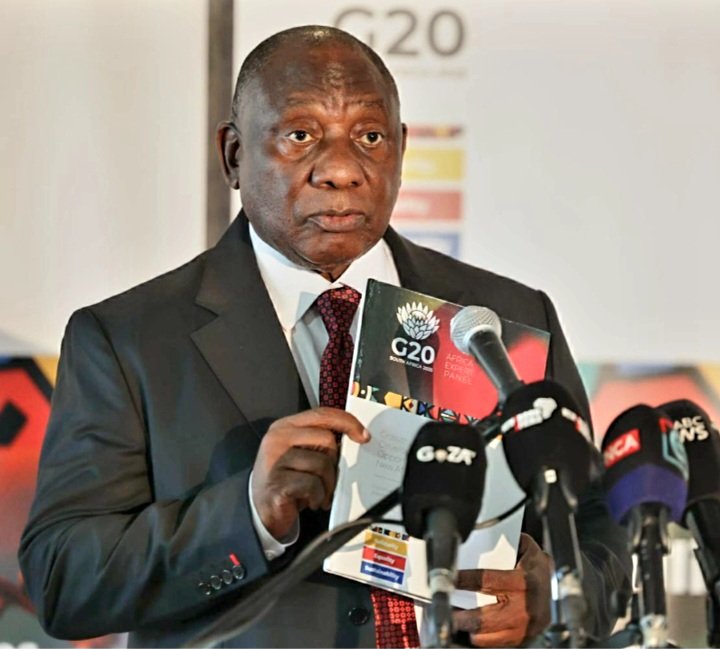
Global leaders of the world’s biggest economies have arrived in Johannesburg, South Africa, for the G20 Summit – the first one to be held in Africa – at the National Recreation Centre (Nasrec) southwest of the continent’s economic powerhouse.
Africa’s most advanced economy will welcome more than 1000 people from 42 countries and organisations to the summit.
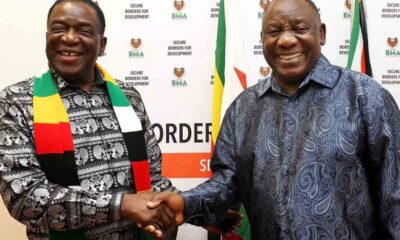
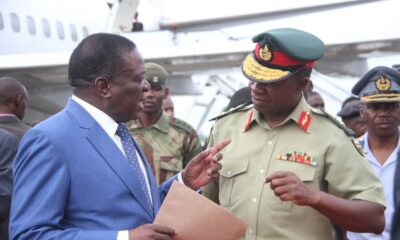
Zimbabwe, a neighbour, will be represented by Vice-President Constantino Chiwenga who is already in Johannesburg.
South Africa’s G20 Presidency takes place when the world is facing a series of overlapping and mutually reinforcing crises, including climate change, underdevelopment, inequality, poverty, hunger, unemployment, technological changes and geopolitical instability.
Under the overarching theme “Solidarity, Equality and Sustainability,” South Africa’s G20 leadership reflects the nation’s strategic priorities of inclusive growth, poverty reduction, and the building of a capable, ethical, and developmental state.
However, South Africa’s G20 stewardship demonstrates the challenge of inclusion in a fractious world amid controversy between Pretoria and Washington DC.
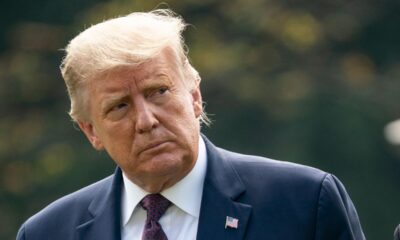
United States President Donald Trump is boycotting the summit over allegations of a “white genocide” in the country, which have been rejected and discredited.
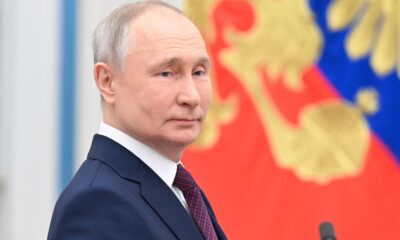
Other powerful leaders who will be absent are Russian President Vladimir Putin who has a warrant of arrest by the International Criminal Court – of which South Africa is a member – over the Ukraine war and Chinese leader Xi Jinping who is sending his Prime Minister Li Qiang.
G20 members include the world’s major economies, representing 85% of global GDP, 75% of international trade, and two-thirds of the world’s population.
The G20 comprises 19 countries – Argentina, Australia, Brazil, Canada, China, France, Germany, India, Indonesia, Italy, Japan, Republic of Korea, Mexico, Russia, Saudi Arabia, Turkey, United Kingdom, United States, South Africa, European Union, and since 2023, the African Union.
The G20 Summit in Johannesburg has been undermined by a threatened US boycott, increasing cutthroat global competition and clashes over climate change.
Yet it could still exemplify the power of multilateralism in an era of competing agendas and contradictions where consensus is a rare commodity.
The summit will focus on the three aspirational themes of South Africa’s G20 presidency: solidarity, equality and sustainability.
With the US saying it will avoid the gathering despite a last-minute change of heart and global commitment to multilateralism being tested more broadly, the summit will not be a grand moment of solidarity or result in decisive action.
It might actually showcase divisions over critical issues affecting the Global South. However, the issues championed by South Africa, including debt relief and climate finance, are important for the world.
South Africa’s commitment to multilateralism makes it a fitting host that can help to facilitate dialogue despite a lack of consensus.
This is exemplified by South Africa’s ability to balance often controversial economic and political relations across the G20 and beyond.
South Africa is often caught in the web of geopolitical contradictions and instability.
Traditional powers are less receptive to South Africa’s agenda than previous G20 presidencies.
But the summit could demonstrate the enduring need for committed multilateralism and reflect the determination of the Global South to have its voice heard.
The G20 was founded in 1999 after the Asian financial crisis of 1997 – 1998 as an informal forum for the finance ministers and central bank governors of the most important industrialised and developing economies to discuss international economic and financial stability.
The G20 was upgraded to the level of Heads of State/Government in the wake of the global economic and financial crisis of 2007, and in 2009, when it became apparent that the necessary crisis coordination would only be possible at the highest political level.
Since then, the G20 leaders have met regularly, and the G20 has become the premier forum for international economic cooperation.
To ensure continuity, the presidency is supported by a “troika” made up of the current, immediate past and next host countries.
During South Africa’s Presidency, the members of the G20 troika are Brazil, US and the host.
The leaders of the two most powerful countries in the world will be conspicuous by their absence.
Trump said that no US officials will attend the summit, saying white South Africans are being “killed and slaughtered”, citing the widely discredited genocide claims.
South African President Cyril Ramaphosa said yesterday the US will now be represented in one form or another amid continuing discussions.
The White House reacted to this, saying Ramaphosa was “running his mouth” over the issue amid continuing controversy.
Li will represent Chinese President Xi Jinping, as he did at the 2023 G20 in New Delhi, India, and at the BRICS summit in Brazil this year.
The presidents of Argentina, Russia and Mexico will also not attend the summit. Argentina’s President Javier Milei – right-wing libertarian – is a close ally of Trump and a deep critic of the climate and inclusion issues that South Africa has been promoting.
Putin will not attend as he also failed to pitch as the BRICS 2030 summit due to the ICC warrant of arrest.
He will be represented by Maxim Oreshkin, the deputy chief of staff of the presidential office.
South Africa has played down the focus on attendance, with Foreign Minister Ronald Lamola saying “The G20 should send a clear message that the world can move on with or without the US”.
Yet the absence of these global will linger over the summit, which is an important event particularly for South Africa, Africa and the Global South.