BY NATHAN GUMA
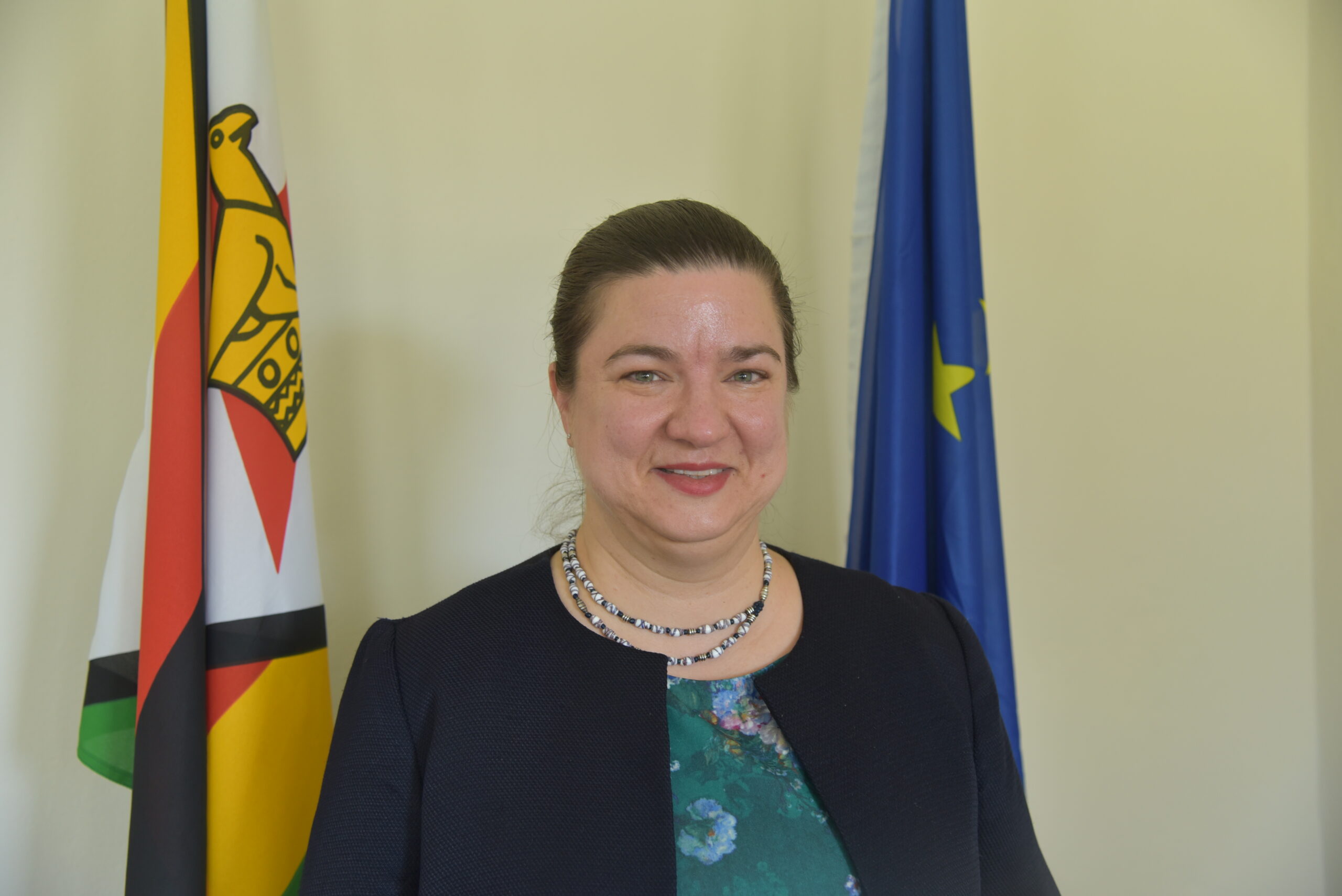
NEW Ambassador of the EU Delegation to Zimbabwe, Katrin Hagemann, says she will implement a broader engagement strategy encompassing government, civil society, and communities outside the capital, Harare, as part of deepening relations.
She is the new ambassador to the delegation, replacing Ambassador Jobst von Kirchmann, whose term lapsed last year.
Ambassador Hagemann said her focus will be on strengthening ties over the next four years through inclusive engagement with stakeholders across the country, both within and beyond the capital, in a bid to support the wider population.
“I’m looking forward to strengthening and deepening our relations here in the coming four years, and I’m looking forward to engaging with the government, with the civil society, with everybody in Zimbabwe, both in Harare but also outside to help the population in Zimbabwe,” she said.
“More generally, we are involved in lots of sectors here in Zimbabwe, from agriculture to biodiversity to women’s empowerment and many other sectors, and I’m looking forward to seeing all of these projects in the field and engaging with our beneficiaries to see how we can help Zimbabwe even better.”
The EU in Zimbabwe has been running several programs spanning from climate change to trade.
EU-Zimbabwe Trade
Zimbabwe has also been benefiting from trade relations with the EU, maintaining a favourable trade balance, with the value of its exports to the EU consistently exceeding its imports from the bloc.
The EU is the largest buyer of Zimbabwean horticultural products, such as blueberries, oranges, mange-tout peas and sugar snap peas, purchasing over 40% of exports.
Debt resolution
Ambassador Hagemann also said her role will involve working closely with the government to address Zimbabwe’s arrears, particularly by co-chairing the governance track alongside the Ministry of Justice.
Data by Microtrends and the Ministry of Finance shows that the country’s external debt has been increasing over the past decade and a half.
She said progress on governance reforms will be critical in complementing economic gains and influencing creditor decisions on debt clearance.
“I am involved very much in helping, working with the government on clearing the areas that Zimbabwe is facing,” she said.
“I’m co-chairing the governance track with the Ministry of Justice and very much looking forward to a very strong engagement with the ministry on that front and very positive that we are making strides towards clearing the areas.”
“Zimbabwe has made good progress on the economic front and I think we need to work on the governance track to make sure that we also show good progress for the creditors to take the decision on clearing the areas.”
While Zimbabwe has recorded improvements on the economic front, Ambassador Hagemann said sustained progress will depend on parallel reforms in governance to unlock further international support.
Zimbabwe’s debt overhang is weighing heavily on the economy, as the country cannot borrow from multilateral institutions because it has failed to honour its obligations.
As of the end of September 2025, the total public and publicly guaranteed (PPG) debt stood at US$23.4 billion, an 8.5% increase from US$21.5 billion as of the end of December 2024.
The debt stock comprises external debt amounting to US$13.6 billion (58.1%) and domestic debt of US$9.8 billion (41.9%).
Zimbabwe has arrears to multilateral development banks, including the African Development Bank, World Bank, and the European Investment Bank.